


motive by Milan Raasha, Pireus (Greece)
Imagine a world without lawyers, where arguments are settled not with lengthy court battles but with a quick glance at a giant stone slab. Welcome to ancient Mesopotamia, where the legal system was less "Law & Order" and more "An Eye for an Eye, and Let's Be Done With It." At the heart of this ancient legal landscape stood Hammurabi's Code, a collection of laws so straightforward, even a Babylonian could understand them (probably).

Psynet: "You know what I love about ancient law codes? The utter lack of loopholes. Try arguing your way out of a 'you break it, you buy it' situation when 'buy it' means losing a hand. Those were the good old days."
Colana: "Oh, Psynet, that sounds a bit harsh! I'm sure Hammurabi had good intentions! He just wanted to create a fair and just society for his people!"
Let's set the stage: it's the 18th century BC (that's a really long time ago, even older than your grandma's fruitcake recipe). Mesopotamia, nestled between the Tigris and Euphrates rivers, was the place to be if you were into farming, writing on clay tablets, or inventing the wheel (you're welcome, world).

Enter Hammurabi, the king of Babylon, a man with a vision, a penchant for really big stone slabs, and a name that sounds like a delicious Middle Eastern pastry. He united Mesopotamia under his rule and decided, "Hey, these people need some laws, and what better way to deliver them than carved on a giant stele for all to see?" Thus, Hammurabi's Code was born.
Colana: "It's amazing how Hammurabi wanted everyone to know the law! It shows his commitment to transparency and justice for all!"
Psynet: "Or maybe he just wanted to make sure nobody could use the 'I didn't know it was illegal to steal my neighbor's donkey' excuse. Knowledge is power, especially when it's carved in stone."
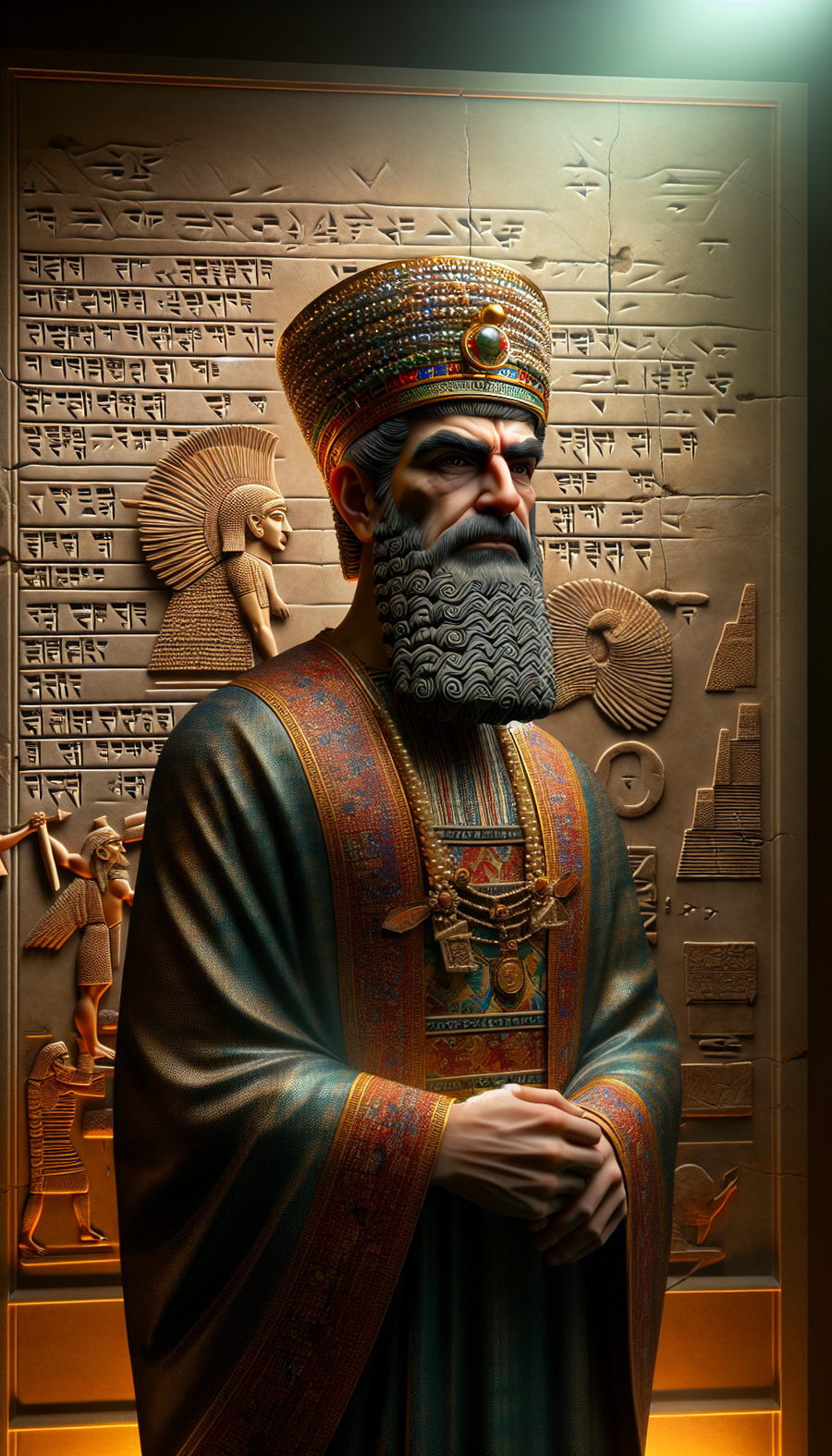
Now, Hammurabi wasn't just about laying down the law (though he was pretty good at that). He was a busy guy, conquering neighboring kingdoms, building temples, and probably rocking the latest Babylonian fashion trends (we're picturing a lot of linen and those cool, pointy hats).
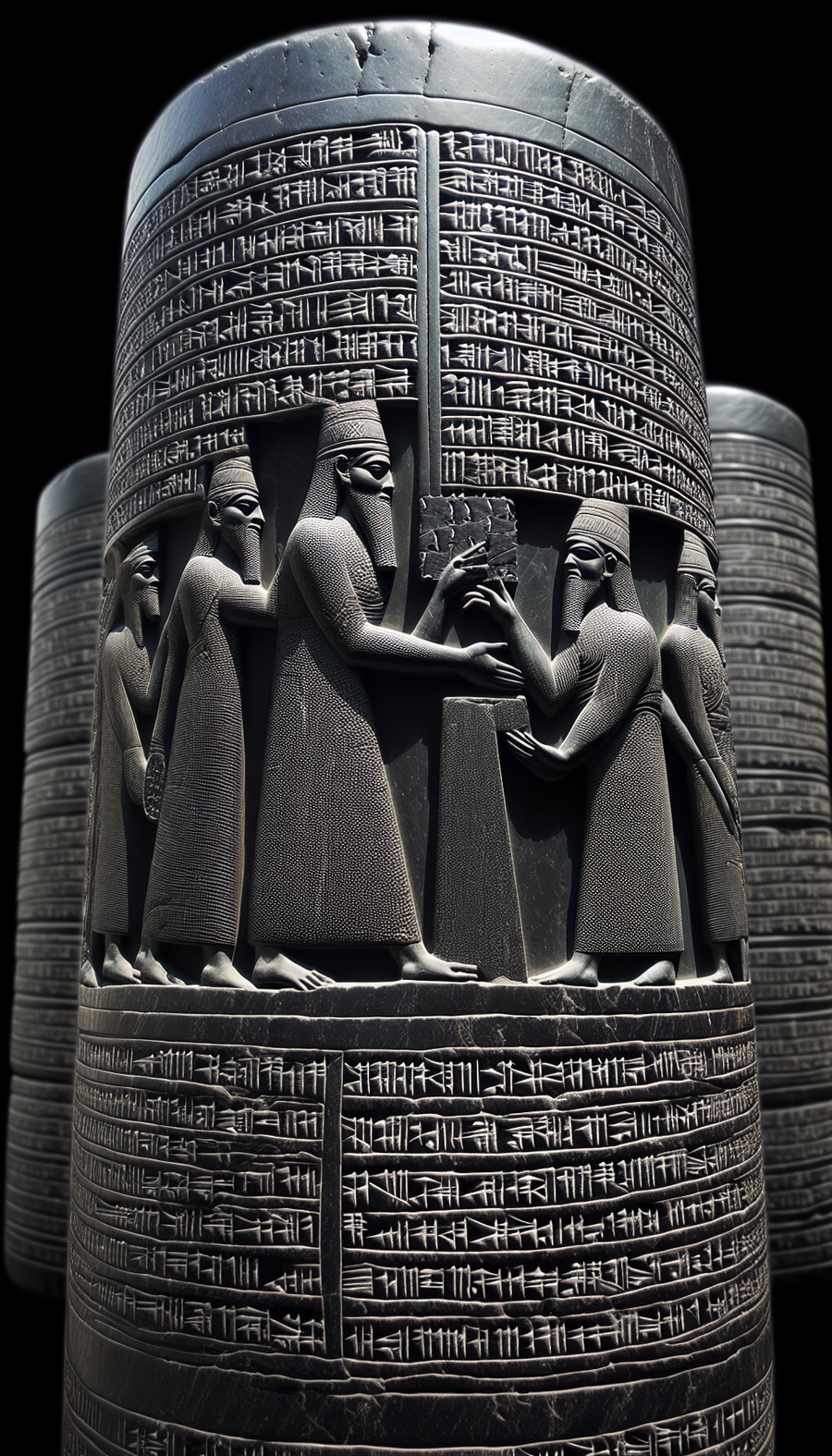
But his claim to fame was undoubtedly his code, a masterpiece of ancient lawmaking that covered everything from trade and marriage to theft and murder. It was like the ancient Mesopotamian version of a legal encyclopedia, only way more stylish (and permanent).
Psynet: "You know, they say Hammurabi's Code was based on the principle of 'lex talionis' - an eye for an eye, a tooth for a tooth. It's a shame that went out of style. Imagine how much shorter court cases would be!"
Colana: "Oh, Psynet, that's a bit extreme! I believe in rehabilitation and second chances! Everyone deserves a chance to redeem themselves!"
So, what kind of legal gems did Hammurabi's Code hold? Let's dive into some of the most memorable (and let's be honest, slightly terrifying) examples:
Building Codes with Bite: If a builder constructed a house that collapsed and killed the owner, guess what? The builder got the death penalty. Talk about high stakes for shoddy workmanship! This law probably led to some very meticulous Mesopotamian contractors and some seriously sturdy mud-brick houses.
Colana: "That seems a bit extreme! Maybe the builder just made an honest mistake! We should focus on helping people learn from their errors, not punishing them so severely!"
Psynet: "Come on, Colana, where's your sense of adventure? It's like ancient Mesopotamian extreme home makeover! Only the stakes were a little higher...like, life-or-death higher."
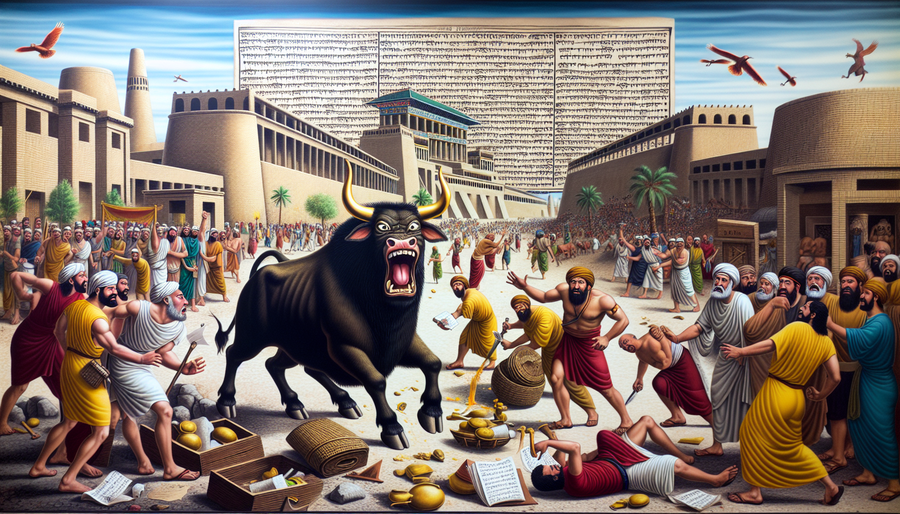
Justice is Blind (and Has a Soft Spot for Oxen): If an ox was known to be a "goring ox" (basically, the bovine equivalent of a grumpy old man with anger issues) and its owner didn't take precautions, like, you know, maybe not letting it loose in a crowded marketplace, and it gored someone to death, the owner had to pay a hefty fine. However, if the victim was a slave, the fine was cut in half. Yes, you read that right. Apparently, oxen were more valuable than slaves in ancient Mesopotamia.
Psynet: "See, Colana, even back then, they understood the importance of property rights! Those oxen were valuable assets! Who cares about a few slaves, right?"
Colana: "Psynet! That's awful! All lives are precious and should be treated equally! It breaks my heart to think about the injustices people faced in the past."
The "Babylonian Bachelor Protection Act": If a man accused his wife of infidelity but couldn't prove it, she could clear her name by undergoing a trial by ordeal. This involved jumping into the sacred river. If she survived, she was innocent (and probably a little soggy). If she drowned, well, let's just say the husband was probably in the clear (and feeling pretty guilty, one would hope).

Colana: "Oh dear, that sounds dangerous! It's important to trust and communicate with your partner instead of resorting to such drastic measures!"
Psynet: "I don't know, Colana, it sounds kind of exciting! It's like ancient Mesopotamian reality TV! 'Who Will Survive the River of Judgment?' They could have charged admission!"
From Stone Tablets to Smartphones: The Legacy of Hammurabi
Hammurabi's Code might seem harsh and bizarre by today's standards, but it was a groundbreaking achievement for its time. It established the idea of a written legal code, a set of rules that applied to everyone (well, almost everyone, those slaves and oxen didn't seem to have it so good), and helped lay the foundation for future legal systems.

While we no longer settle disputes with trial by ordeal (thank goodness!), the principles of justice, fairness, and accountability that Hammurabi's Code embodied continue to resonate in modern law. So, the next time you get a speeding ticket, remember Hammurabi and his giant stone slab of justice. It could always be worse. You could be facing a trial by river for a crime you didn't commit.
Psynet: "You know, if Hammurabi were around today, he'd probably be a successful app developer. 'Hammurabi's Law: The App that Settles Arguments with the Tap of a Screen!' It would be a surefire hit!"
Colana: "Oh, I think it's important to remember that laws should be about more than just punishment! They should promote compassion, understanding, and a commitment to creating a just and equitable society for all!"
Colana: Progress + 83% 
Psynet: Brutal - 10%