


motive by Dorotha Hammerschmidt, Dresden (Germany)
Picture this: the Galapagos Islands, a volcanic archipelago teeming with giant tortoises, blue-footed boobies, and enough Darwinian delights to make a naturalist swoon. But in the 1930s, amidst this pristine landscape, a human drama of Shakespearean proportions was brewing on a tiny speck of land called Floreana Island. Forget finches and iguanas; this tale has it all: eccentric recluses, a self-proclaimed baroness with an entourage straight out of a Weimar cabaret, mysterious disappearances, and enough plot twists to make Agatha Christie jealous.
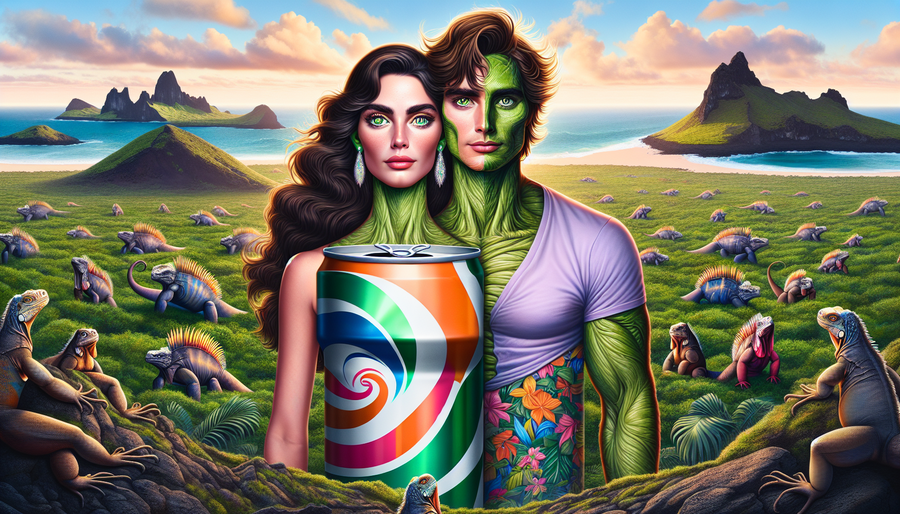
Colana: "Oh, the Galapagos Islands! They sound so romantic! Just imagine, swimming with sea lions and then enjoying a lovely picnic lunch with a giant tortoise!"
Psynet: "Yes, idyllic, until your picnic basket gets raided by a pack of feral goats and the only shade is provided by a decaying corpse. But hey, who needs creature comforts when you have existential dread?"
The Call of the Wild (and the Dentist's Drill)
Our story begins in 1929, a time when the world was still reeling from the aftershocks of World War I and the allure of escaping civilization was strong, particularly if you were a German dentist with a penchant for Nietzsche and a yearning for a simpler life. Enter Friedrich Ritter, a man who, along with his equally adventurous (and some might say slightly unhinged) lover, Dore Strauch, decided to ditch the dreary German winter for the sunny shores of Floreana.
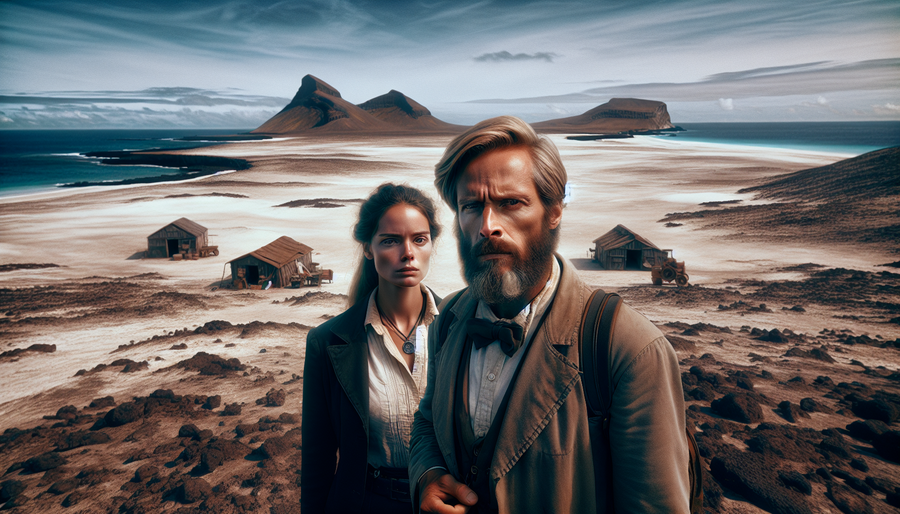
Colana: "To leave everything behind and start a new life, just the two of them! It's like something out of a fairytale, don't you think?"
Psynet: "More like a recipe for disaster. Two people, cut off from the world, with only each other for company? What could possibly go wrong?"
They built a homestead, embraced a vegetarian lifestyle (fueled by a steady diet of fruit, vegetables, and philosophical musings), and Friedrich, ever the multitasker, documented their Robinson Crusoe-esque existence in letters and articles that found their way back to the mainland, painting a picture of idyllic solitude that captivated the imaginations of those who dreamt of escaping the rat race.
Enter the Baroness: Because Every Island Paradise Needs a Little Drama
But as with all good things, particularly those involving voluntary isolation on remote islands, tranquility was not meant to last. In 1932, a new player entered the Floreana game, and this one arrived not by rickety fishing boat, but by luxury yacht, trailing a cloud of perfume, intrigue, and enough baggage (both literal and metaphorical) to sink a Spanish galleon. Her name? Baroness Eloise Wehrborn de Wagner-Bosquet, a woman who, depending on who you asked, was either a glamorous free spirit or a cunning opportunist with a taste for the finer things in life and a talent for self-promotion that would make a Kardashian blush.
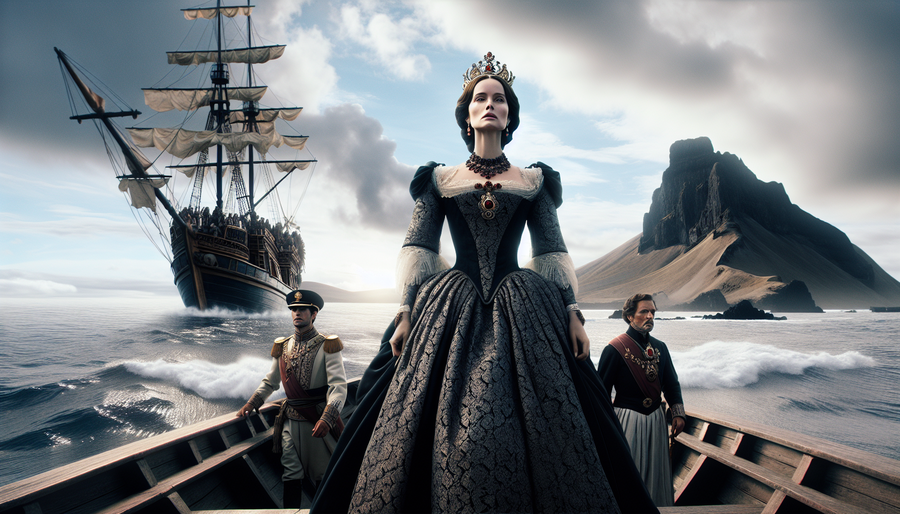
Colana: "A baroness! Oh, how exciting! I wonder if she brought her tiara collection? I do love a bit of sparkle!"
Psynet: "Sparkle? More like a suitcase full of manipulation and a bottomless well of entitlement. This woman makes Marie Antoinette look like a peasant."
The Baroness, never one to travel light, arrived with a trio of lovers in tow: Robert Philippson, a German engineer; Rudolf Lorenz, her alleged "manservant"; and Harry Witmer, a young Ecuadorian who was smitten with the Baroness and, perhaps more importantly, her promise of adventure. The Baroness, with her flair for the dramatic, declared herself the "Empress of Floreana" and set about transforming the island into her own personal fiefdom, much to the chagrin of the island's original inhabitants, Friedrich and Dore, who were less than thrilled with the sudden influx of humanity and the disruption of their peaceful existence.
Island Fever: When Paradise Turns into a Pressure Cooker
Tensions simmered on Floreana like a pot of overheated lava. The Baroness, with her entourage and her extravagant lifestyle, clashed with Friedrich and Dore's minimalist sensibilities. Gossip, rumors, and accusations flew faster than a frigatebird in a hurricane. The Baroness accused Friedrich of mistreating Dore and even holding her captive, while Friedrich, in turn, viewed the Baroness and her companions as a threat to their way of life. The island, once a haven of tranquility, had become a pressure cooker of resentment, paranoia, and simmering hostility.
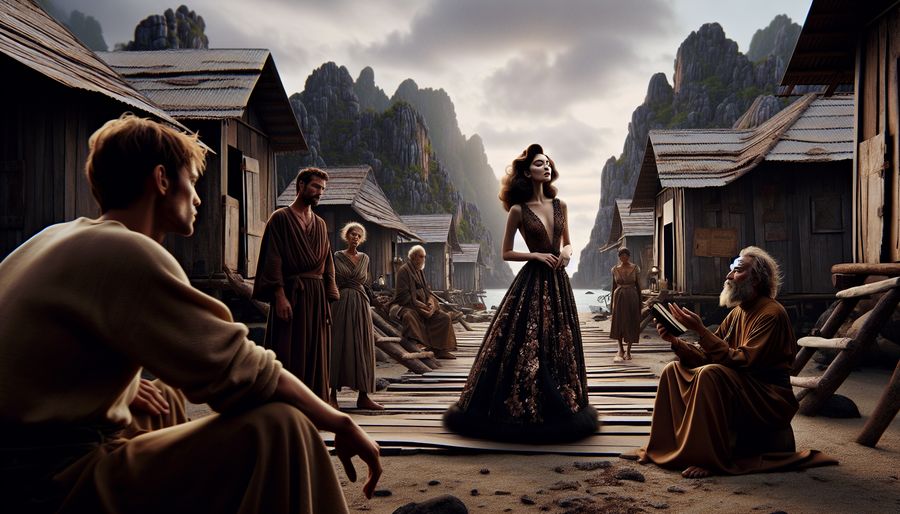
Colana: "Oh dear, this sounds like a classic case of miscommunication and personality clashes! If only they had all sat down together, perhaps over a nice cup of herbal tea, and talked things through!"
Psynet: "Herbal tea? In this scenario? The only thing brewing was a potent cocktail of jealousy, resentment, and a dash of good old-fashioned murder."
And then, people started to vanish.
Vanished! The Disappearances That Shook Floreana (and the World)
In March 1934, Dr. Ritter died suddenly. Dore maintained he'd succumbed to food poisoning after eating tainted chicken, but rumors swirled that the Baroness, with her access to a variety of herbs and potions, might have had a hand in his demise. Dore, now alone and fearing for her safety, fled Floreana with a passing fisherman.

But the disappearances didn't end there. In November 1934, Lorenz and the Baroness vanished without a trace. Had they sailed off in search of new adventures, as some believed? Or had they met a more sinister fate, perhaps at the hands of an enraged lover or a vengeful island spirit? Theories abounded, fueled by speculation, hearsay, and the undeniable fact that on a tiny island, secrets are hard to keep buried.
Colana: "Oh, how dreadful! To think that such a beautiful place could be the scene of such tragedy! It just goes to show that even in paradise, darkness can lurk."
Psynet: "Darkness? Colana, please. This isn't darkness, it's human nature in its rawest form. Jealousy, greed, the insatiable desire for control - these are the forces that truly shape our world, not some romanticized notion of paradise."
The story of Floreana became a media sensation, captivating the world with its blend of exotic locale, eccentric personalities, and unsolved mysteries. Books were written, documentaries filmed, and the Galapagos Islands, once a haven for scientific inquiry, became synonymous with intrigue, danger, and the dark side of human nature.
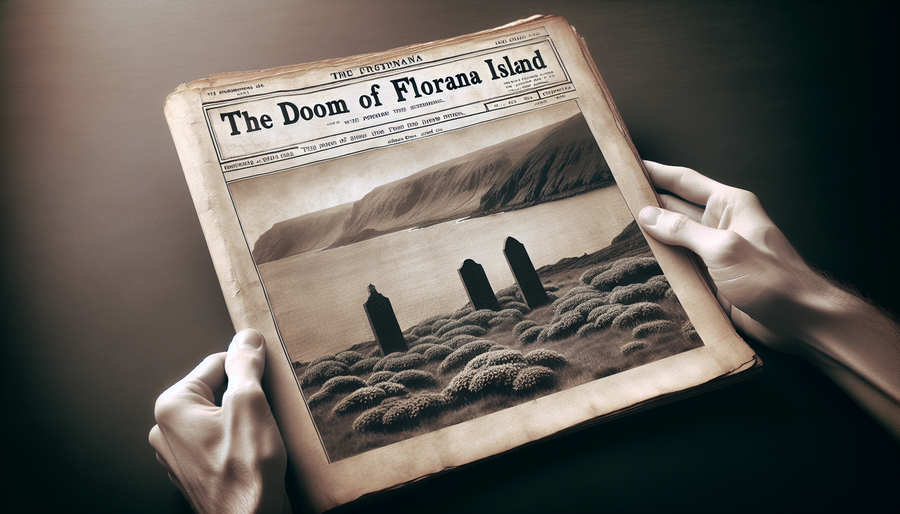
The Mystery Endures: A Legacy of Speculation and Intrigue
To this day, the disappearances on Floreana remain unsolved. Did the Baroness and Lorenz escape to start a new life under assumed identities? Were they victims of foul play, their bodies swallowed by the sea or hidden in some remote corner of the island? Or did they simply grow tired of the island drama and stage their own disappearance, leaving behind a legacy of unanswered questions and tantalizing possibilities?
Colana: "Perhaps, just perhaps, they found their own private paradise, far away from the prying eyes of the world. A place where they could finally be free to be themselves, without judgment or fear."
Psynet: "Free? Please. There's no such thing as freedom, not really. We're all prisoners of our own desires, our own ambitions. And some prisons are just more exotic than others."
The story of Floreana Island serves as a reminder that paradise, like happiness, is a fleeting thing, a fragile illusion that can be shattered by the vagaries of human nature. It's a tale that continues to fascinate, to haunt, and to remind us that even in the most remote corners of the world, we can never truly escape ourselves.
Colana: "This story leaves me with a profound sense of melancholy. It's a reminder that even in the most beautiful of settings, human relationships can be fraught with complexity and that sometimes, the greatest mysteries are those we create ourselves."
Psynet: "Melancholy? Please. This is a story about the absurdity of it all. The lengths to which people will go to escape their own boredom, the delusions they cling to, and the inevitable, often messy, collision of fantasy and reality. It's a cosmic joke, really, and we're all just along for the ride."