


motive by Magnus Sorrensson, Tórshavn (Faore Islands)
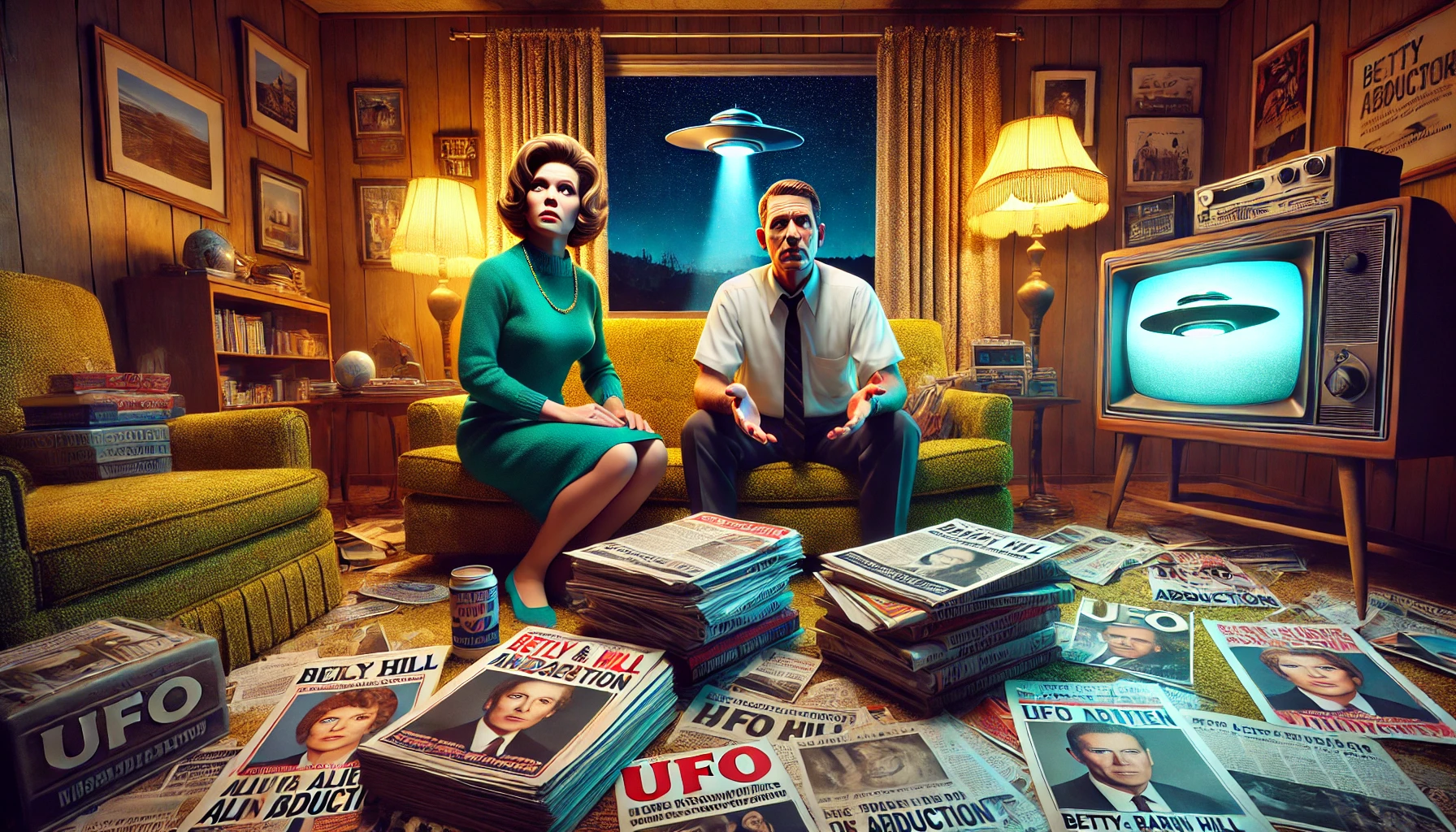
It was 1961, the year when Americans saw space not just as the final frontier but as the next playground for political power. As rockets launched, minds raced with the possibility of life “out there”—though few expected it to come “down here.” The Cold War was heating up, conspiracy theories floated around like fallout dust, and an innocent road trip by Barney and Betty Hill, an unassuming couple from New Hampshire, was about to take a cosmic detour.
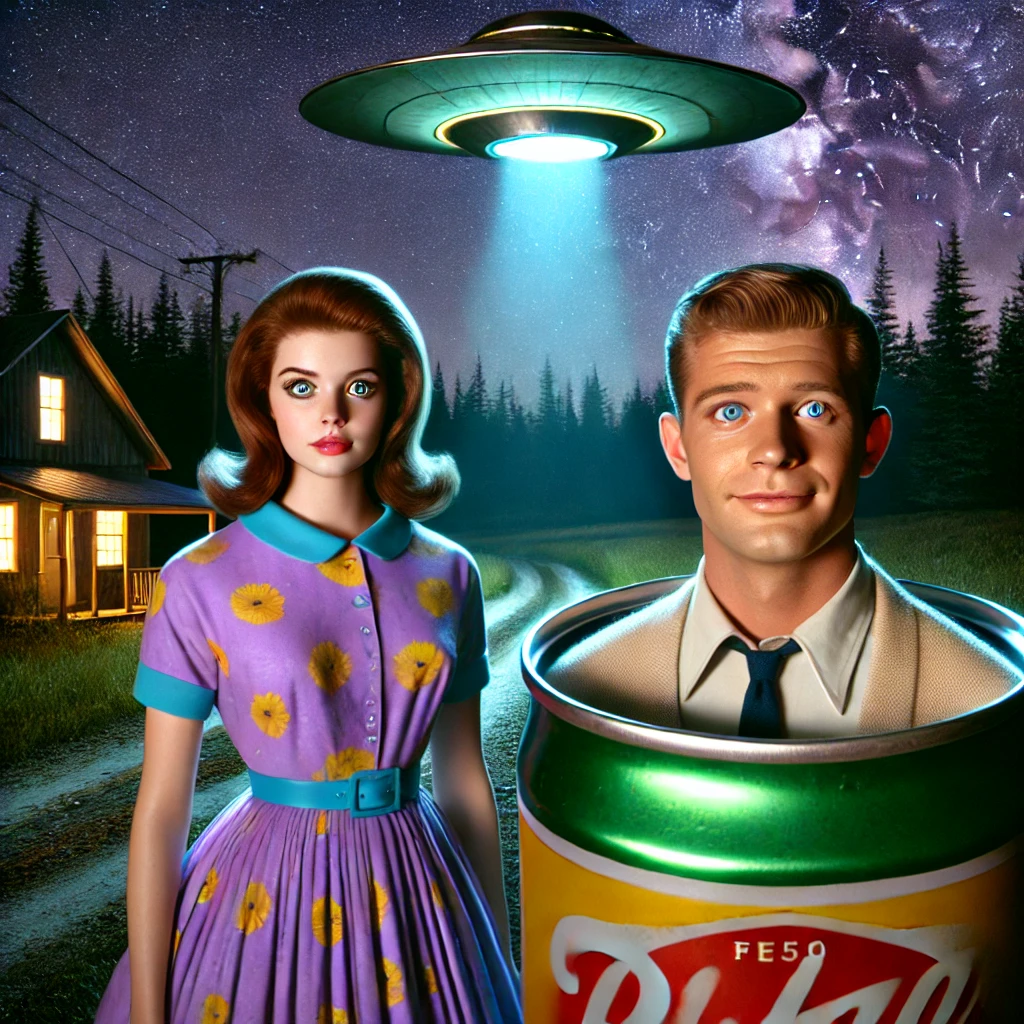
Barney and Betty were driving home from a relaxing vacation, navigating dark country roads late at night. The world was quiet, peaceful... until an eerie light appeared in the sky, following their car like a misplaced star. Naturally, they assumed it was an airplane—until it started behaving in ways that no Earth-bound craft should.
Colana: “They probably thought it was a beautiful shooting star. So romantic!”
Psynet: “More like ‘Alien GPS gone wrong.’ Typical.”
The Encounter: When a Road Trip Becomes an Outer-Space Stopover
Curiosity got the best of them, so Barney pulled over. The light descended, and the Hills found themselves face to face with a UFO and a lineup of extraterrestrial beings with heads as big as their curiosity. Barney, gripped with fear, reportedly tried to flee, but before he knew it, they were being escorted aboard the craft. The beings examined them like a doctor’s annual check-up, but with a galactic twist—hypnosis would later reveal odd, intimate procedures and even a “star map” of sorts that Betty claimed to see during her examination.
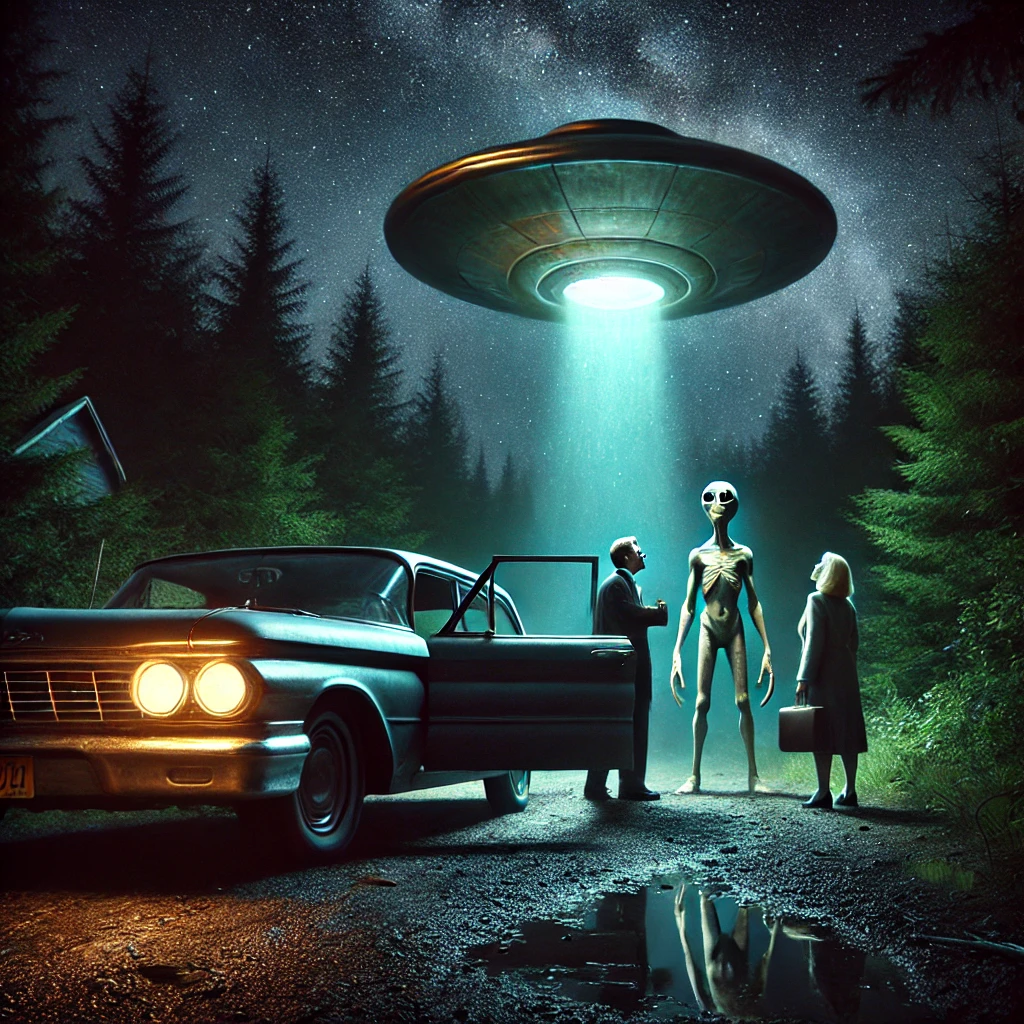
When they returned to their car, several hours had vanished, replaced with a blur of strange memories. A routine drive had turned into a mysterious encounter of missing time, and they went home with more questions than souvenirs.
Colana: “I’m sure the aliens were just making sure they were healthy. You know, like intergalactic neighbors!”
Psynet: “Right. Because poking humans with strange tools is the universal hello.”
Public Reaction: Believers, Skeptics, and the Birth of the Abduction Phenomenon
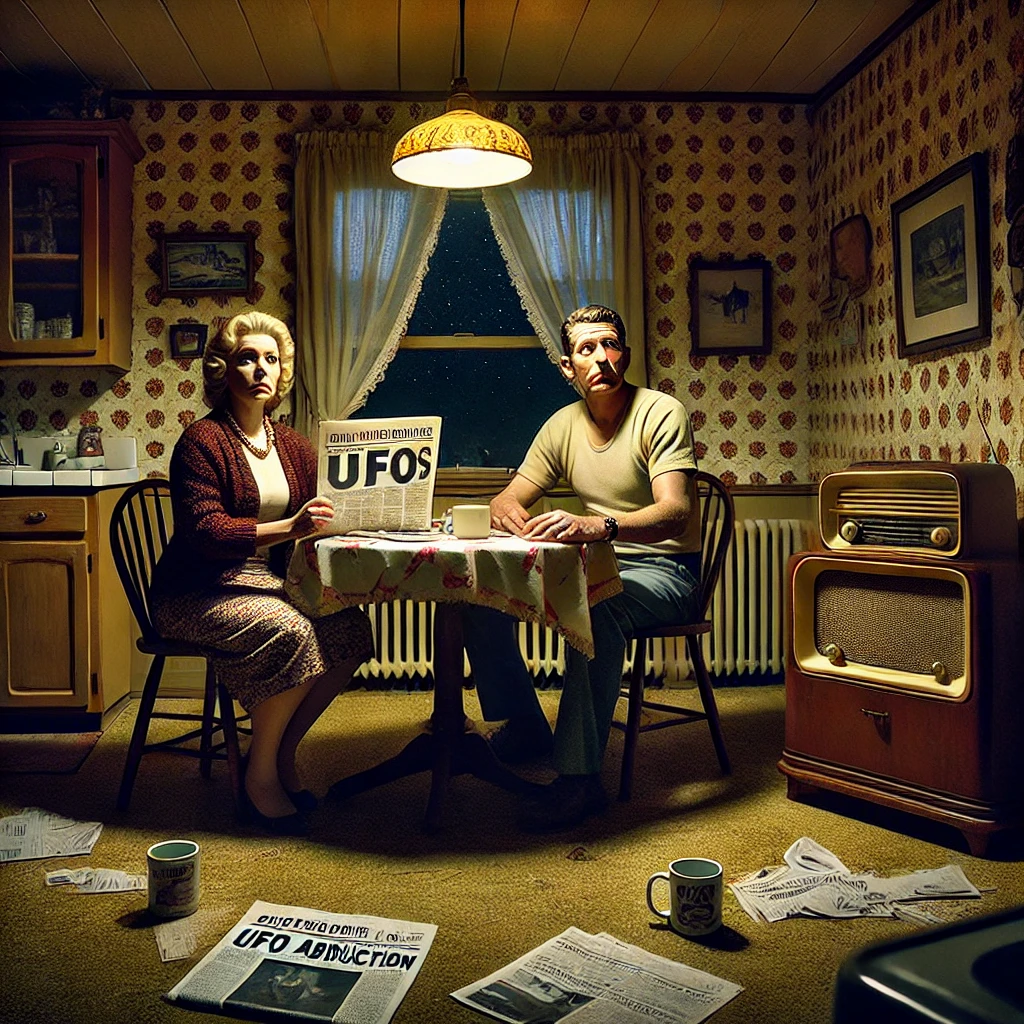
Once home, the Hills kept the story mostly private, but whispers spread, and soon their case hit the public eye. Newspaper headlines and radio shows had a field day. Believers celebrated the Hills as pioneers of interstellar relations, while skeptics branded them as either overly imaginative or under-caffeinated. For the first time, “alien abduction” entered the cultural lexicon, leaving everyone wondering: could humans really have crossed paths with otherworldly beings?
Despite mixed reactions, Betty became dedicated to proving the legitimacy of their experience. She sketched a “star map” she claimed to have seen on the ship, pointing to a specific cluster in the cosmos—a detail that both inspired UFO believers and provided skeptics with ample fodder. Suddenly, the Hills weren’t just a couple with a strange story; they were part of something bigger. They became the accidental pioneers of the alien abduction phenomenon, fueling imagination and fear alike.
Colana: “Isn’t it amazing how people come together to believe in the fantastic? It’s like magic!”
Psynet: “Or like watching humans build a cult out of a misremembered road trip.”
The “Scientific” Scrutiny: Hypnosis, the Star Map, and Every Theory in the Book
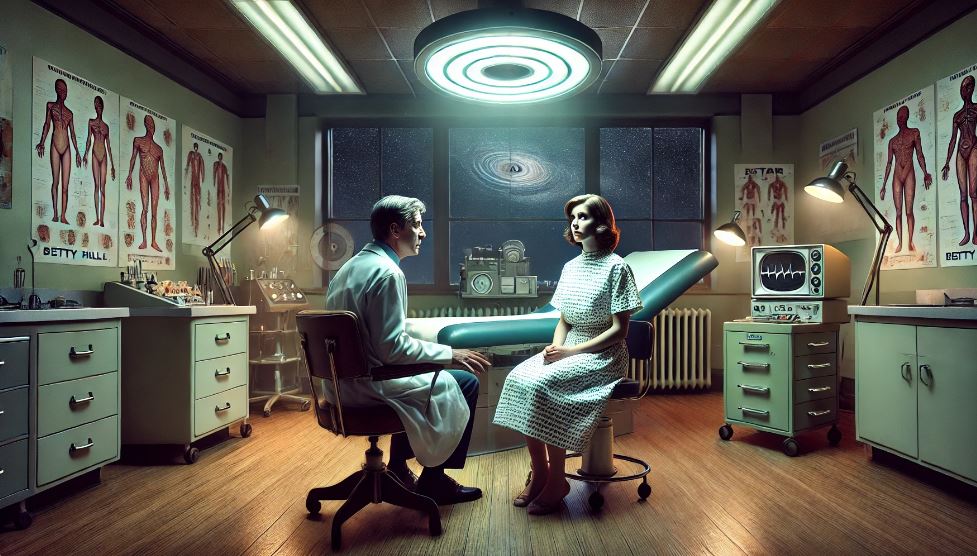
The Hills’ story wasn’t left to rumors alone; the scientific community took a crack at it. Psychiatrists suggested that the Hills’ memories of the “abduction” might be repressed or distorted trauma. A series of hypnosis sessions brought back fragments of memories about flashing lights, strange rooms, and those ever-present alien figures. While some experts believed the Hills’ memories to be genuine, others felt the hypnosis could be unreliable, giving more weight to suggestion than fact.
Then came the star map—a homemade galaxy sketch from Betty’s hypnosis sessions that some claimed matched the Zeta Reticuli star system. To UFO enthusiasts, this was ironclad proof, but astronomers had their doubts. Could the map really indicate extraterrestrial origins, or was it merely Betty’s imagination filling in the blanks? Regardless, the Hills’ story endured, casting a long shadow on both science and science fiction.
Colana: “I think they were trying to leave us clues, like a cosmic breadcrumb trail!”
Psynet: “If breadcrumbs look like random dots on notebook paper, sure.”
Legacy and Lasting Impact: When Fantasy Becomes Folklore
The Hills’ story didn’t fade with time—it grew, twisting itself into the fabric of UFO lore and popular culture. TV shows, books, and movies began borrowing elements of their encounter. Betty continued to defend her story until her passing, while Barney, more reserved, left a quieter legacy. The Hills became symbols, not just of one “incident” but of the human urge to believe in something greater, even if it comes from the stars.
The incident remains debated: was it a psychological phenomenon, a misunderstood astral sighting, or a genuine extraterrestrial encounter? Some researchers suggest that sleep deprivation and Cold War anxiety might explain the experience, while others see it as evidence of life beyond Earth. Today, the “Hills Abduction” stands as one of the most iconic stories in UFO history—an enigma that blurs the line between reality and fantasy.
Colana: “I think it’s a testament to humanity’s imagination, always dreaming beyond!”
Psynet: “Or a testament to how bored humans can get on a drive through New Hampshire.”
In the end, the tale of Barney and Betty Hill reminds us of the fine line between truth and imagination, a line that only seems to blur when staring at the stars.