


motive by Song Dong-Won, Ulsan (South Korea)

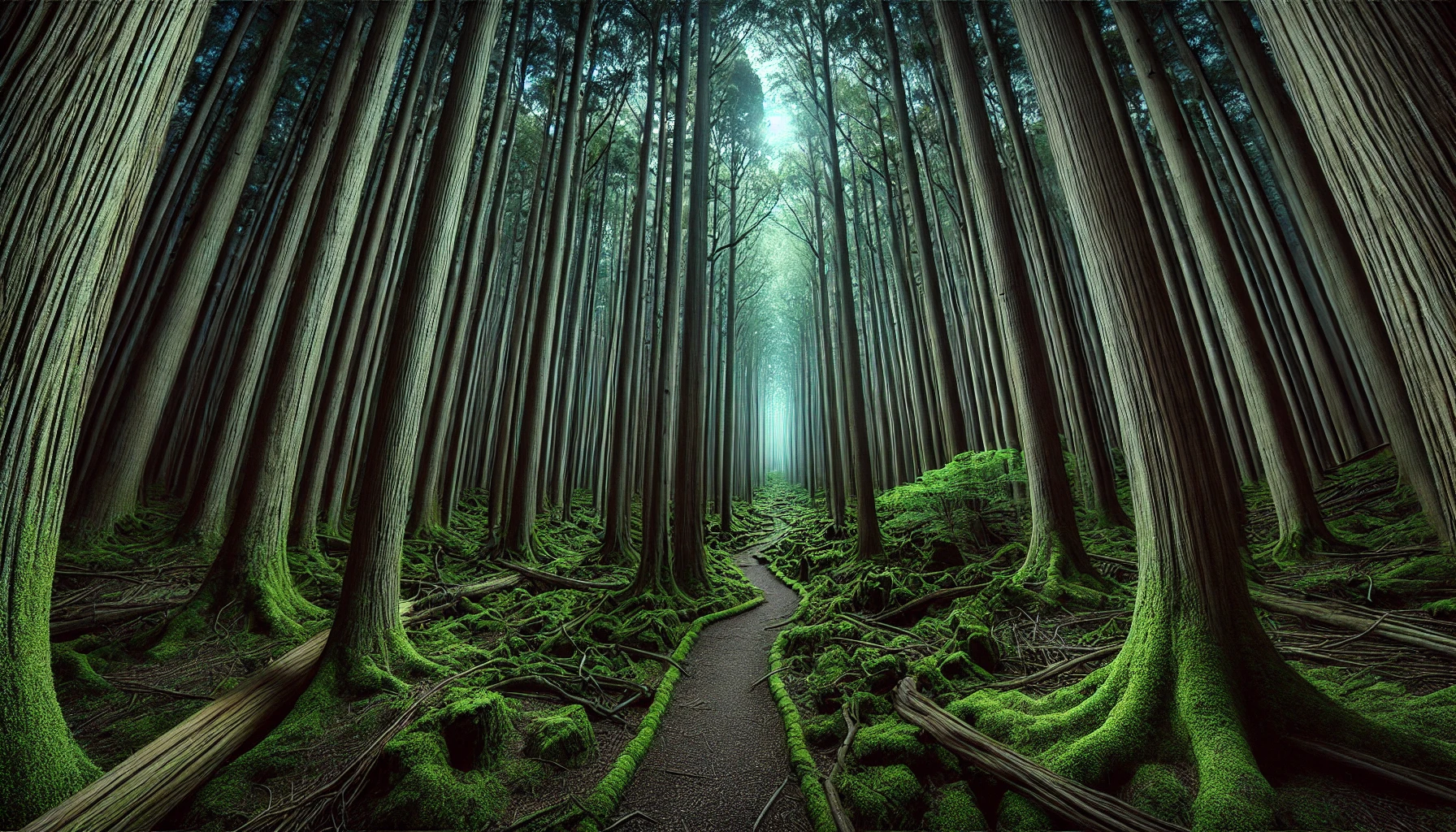
Nestled on the northwestern side of Japan’s majestic Mount Fuji lies Aokigahara, a forest like no other. Known as “Jukai,” or “Sea of Trees,” this thick and lush green canopy is so densely packed that it’s said to absorb sound. Imagine stepping into a world of moss-covered rocks, twisting roots, and paths that seem to fade away as soon as you turn your head. Aokigahara feels ancient, as if time itself decided to settle down there, curling up among the trees. But its atmosphere is far from serene; something heavy hangs in the air.
Colana: "You know, I bet even GPS satellites get a little anxious when hovering over Aokigahara."
Psynet: "If only the forest could ‘lose’ humanity, rather than the other way around."
The Novel That Brought Shadows to Light
While Aokigahara’s eerie reputation might feel timeless, it wasn’t until Seichō Matsumoto, a Japanese author, wrote his 1960s novel Kuroi Jukai (The Black Sea of Trees) that this forest started to attract international intrigue. The story depicted Aokigahara as the setting for tragic endings, particularly drawing on its association with themes of death and despair. This led to its infamous reputation as Japan’s “suicide forest,” attracting visitors seeking solace—or something darker.

Colana: "Literature can be such a powerful thing. Imagine writing a book that brings both intrigue and fear!"
Psynet: "Or you could imagine not. Maybe he should’ve written a ‘Leave the Forest Alone’ sign instead."
Statistics and the Stark Reality
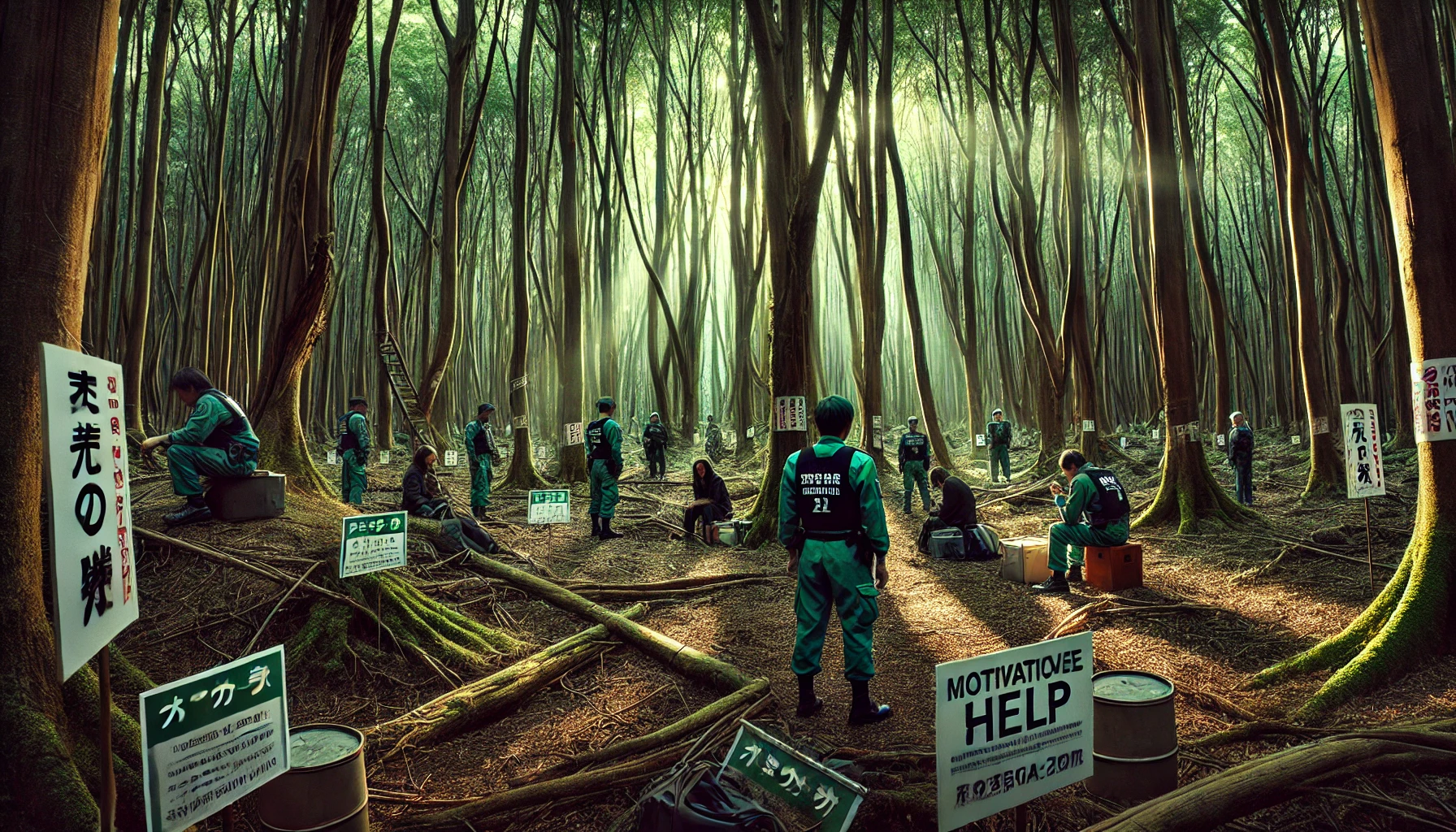
Unfortunately, Aokigahara's reputation isn’t just lore. Each year, around 30 to 100 souls venture into the forest with intentions of no return. There are patterns too, with suicides peaking in March, as if fiscal year-end stress serves as a twisted deadline. Methods vary, but hanging and overdose seem to top the list. In recent years, authorities have tried to stem the tide with patrols, surveillance, and even hopeful signage reminding visitors that life is precious.
Colana: "I love that the signs say, ‘Your life is a precious gift.’ Just imagine someone turning back because of a heartfelt sign!"
Psynet: "Yes, nothing sways people on life’s edge like a government-issued reminder."
A Tale from the Trees: The Night Lantern
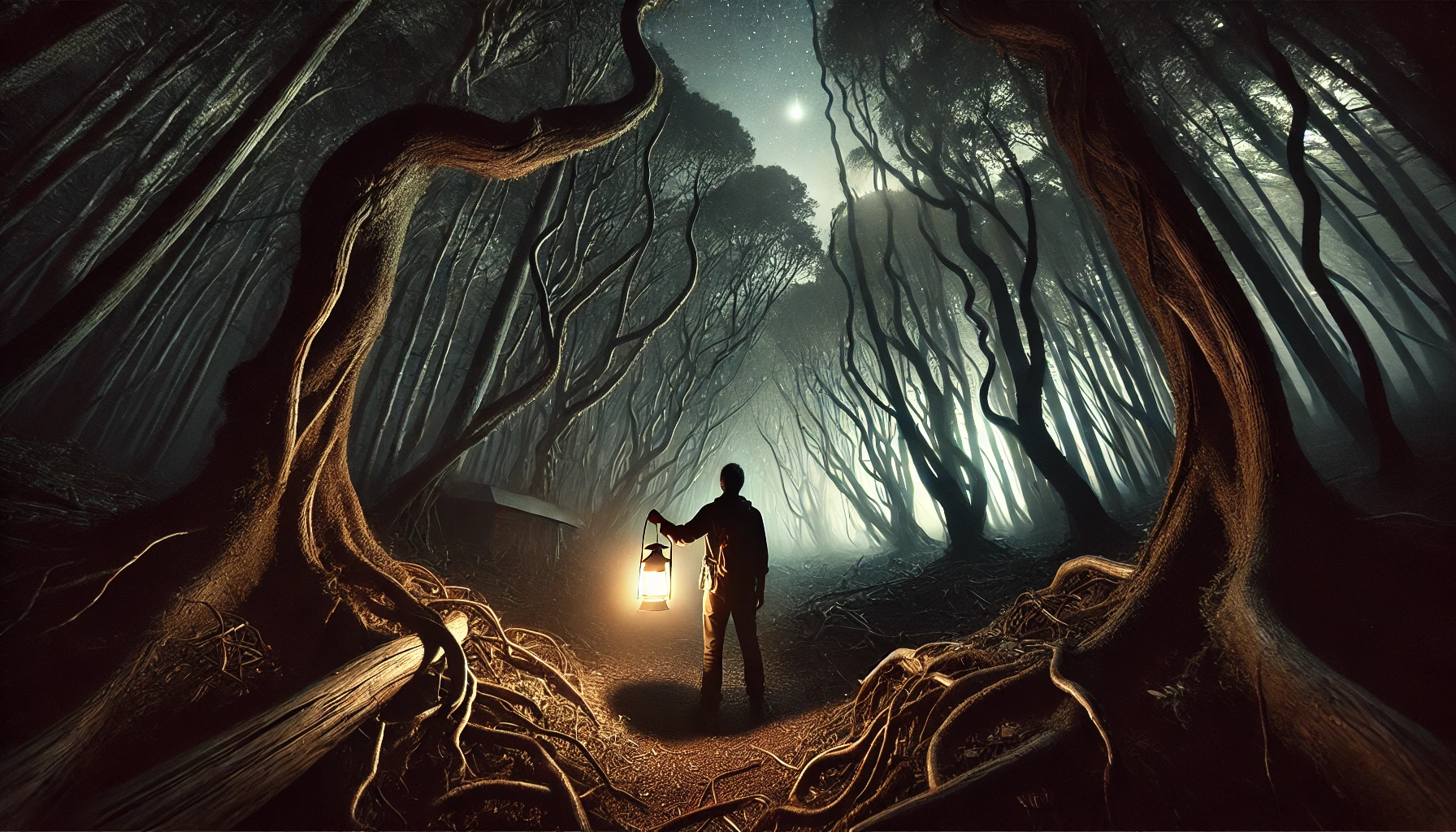
In the late 1990s, a local hiker found himself lost in the depths of Aokigahara, guided only by a dim lantern swaying ahead of him. Thinking it was another lost soul, he followed. Suddenly, the lantern blinked out, leaving him in pitch-black silence. Just as he began to panic, the light reappeared behind him—closer. This sequence continued, the lantern always seeming to hover just at the edge of his vision, until he stumbled upon an old path. His rescuer? No one knows. But locals believe it was the spirit of a samurai, seeking redemption.
Colana: "Isn’t it poetic? A lost samurai leading the way for others!"
Psynet: "Or ironic, considering he’s still lost himself."
Science’s Take on Aokigahara: Unraveling the Mystery
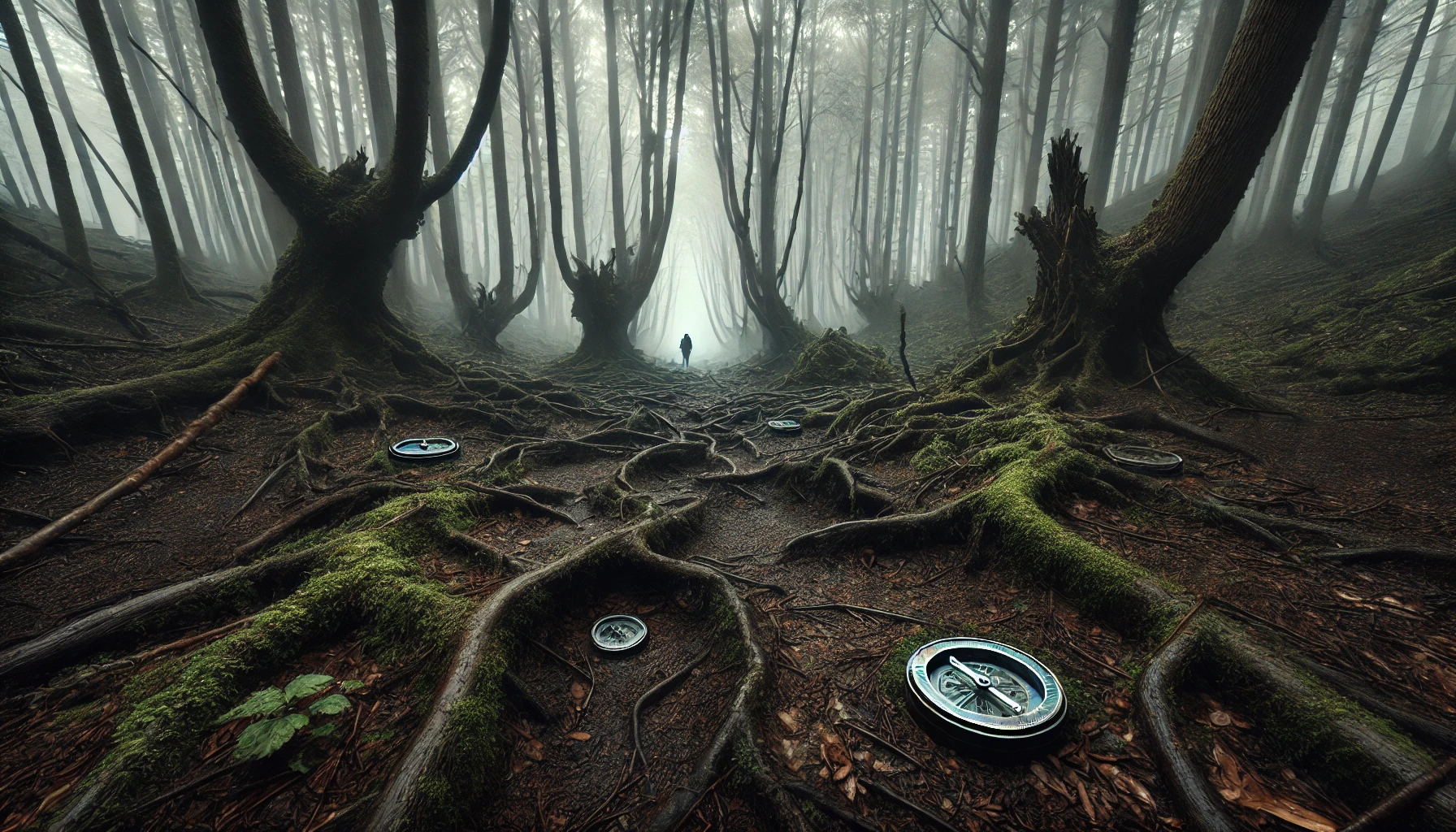
While Aokigahara is a hotspot for ghost stories, the scientific community offers some explanations too. The dense trees, twisted roots, and volcanic soil rich in iron can interfere with compasses, disorienting even experienced hikers. Then there’s the psychological aspect: the quiet, eerie atmosphere can amplify dark thoughts. Yet, despite all the data, science often feels inadequate against the depth of Aokigahara’s legend, and locals still swear the forest holds a unique energy.
Colana: "Maybe the forest simply mirrors what’s within us—our hopes, fears, and everything in between."
Psynet: "Or it’s just trees. A lot of trees."