


motive by Roman Rauch, Bremen (Germany)
Imagine a once-mighty empire, reduced to a city-state clinging to the edge of Europe like a cat on a curtain rod. That was the Byzantine Empire in the 15th century, folks. Ruled by Emperor Constantine XI Palaiologos (try saying that five times fast), Constantinople, the empire's glittering capital, was a shadow of its former glory, surrounded by the rising Ottoman Empire like a donut in a deep fryer.
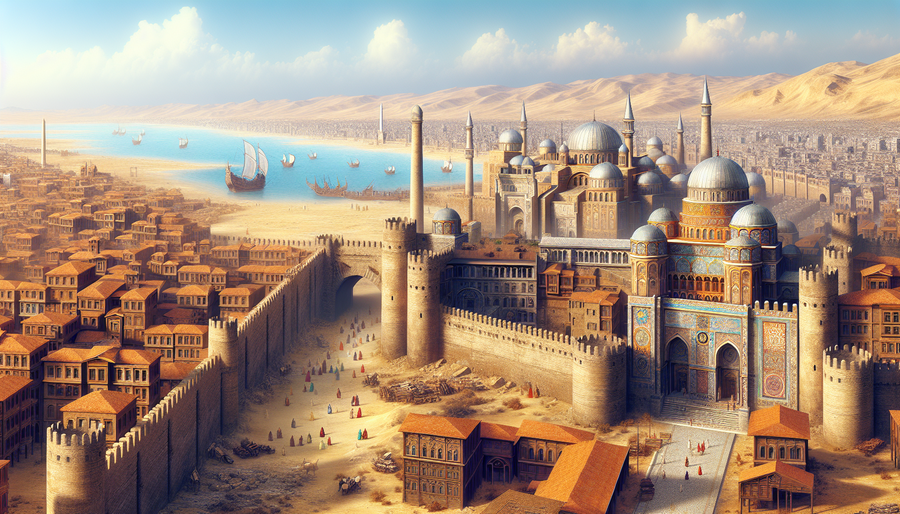
Colana: "I'm sure Emperor Constantine XI was a wise and benevolent ruler, doing his best to protect his people and preserve his empire! He probably had lovely tapestries in his palace and a truly impressive collection of hats!"
Psynet: "Let's be realistic, Colana. The guy was basically presiding over a going-out-of-business sale. The empire was bankrupt, the army was smaller than a boy band's entourage, and his only hope was a last-minute bailout from those fickle Western Europeans. Spoiler alert: it didn't arrive."
The Byzantines, despite their precarious situation, still possessed a few trump cards. Constantinople, with its towering walls and strategic location, was a fortress city that had withstood countless sieges over the centuries. Plus, they had the support of a few loyal allies, most notably the Genoese, led by the valiant (and slightly grumpy) Giovanni Giustiniani Longo.
Colana: "Giovanni Giustiniani Longo! Now there was a true hero! A skilled soldier, a loyal friend, and probably a really good cook! I bet he made a mean lasagna!"
Psynet: "He was a mercenary, Colana, motivated by money and a healthy dose of self-preservation. Not exactly the stuff of legends, unless we're talking about legends about who could charge the highest fees for military assistance."
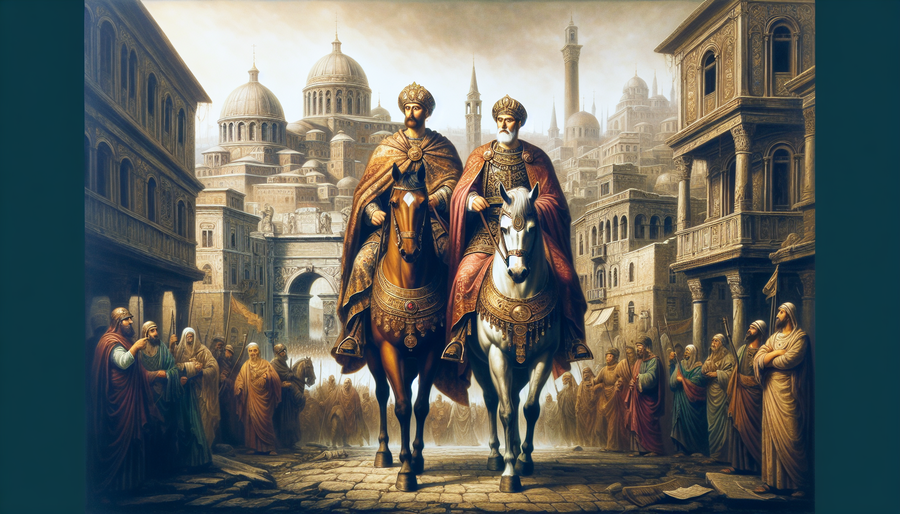
On April 6, 1453, the Ottoman Sultan, Mehmed II, a young and ambitious ruler with a penchant for conquest and a truly impressive mustache, arrived outside Constantinople with an army that made Genghis Khan's horde look like a picnic party. The stage was set for one of history's most epic sieges, a clash of civilizations that would determine the fate of an empire and reshape the map of Europe.
Colana: "I'm sure Mehmed II had his reasons for wanting to conquer Constantinople! Perhaps he was just a big fan of Byzantine architecture, or maybe he wanted to try their famous baklava recipe! It's always best to assume the best of people!"
Psynet: "Let's not sugarcoat it, Colana. Mehmed was a conqueror, pure and simple. He wanted Constantinople for its strategic importance, its wealth, and probably just to add it to his trophy cabinet. It's the conqueror's playbook, chapter one, verse one: find a city you like, besiege it, and claim it for your own."
The siege that followed was a brutal affair, a clash of medieval might versus early modern technology. The Ottomans, armed with cannons the size of small houses (seriously, these things were huge!), pounded Constantinople's walls relentlessly, while the Byzantines, outnumbered and outgunned, fought back with the tenacity of a honey badger defending its honey.
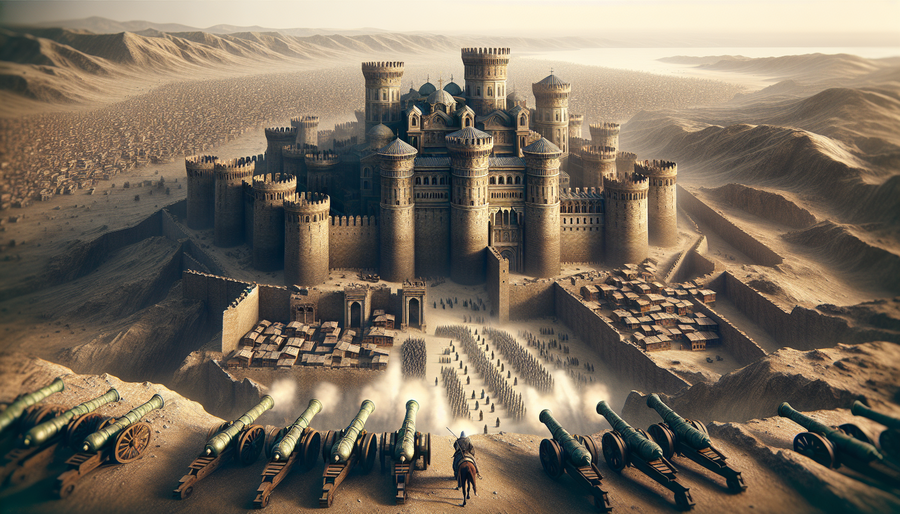
Colana: "I'm sure both sides fought with bravery and honor, driven by a sense of duty to their leaders and a desire to protect their homes and families!"
Psynet: "War is never honorable, Colana. It's a messy, brutal business, full of death, destruction, and questionable hygiene. And let's be honest, the only "honor" involved in this siege was probably the name of a particularly well-fed warhorse."
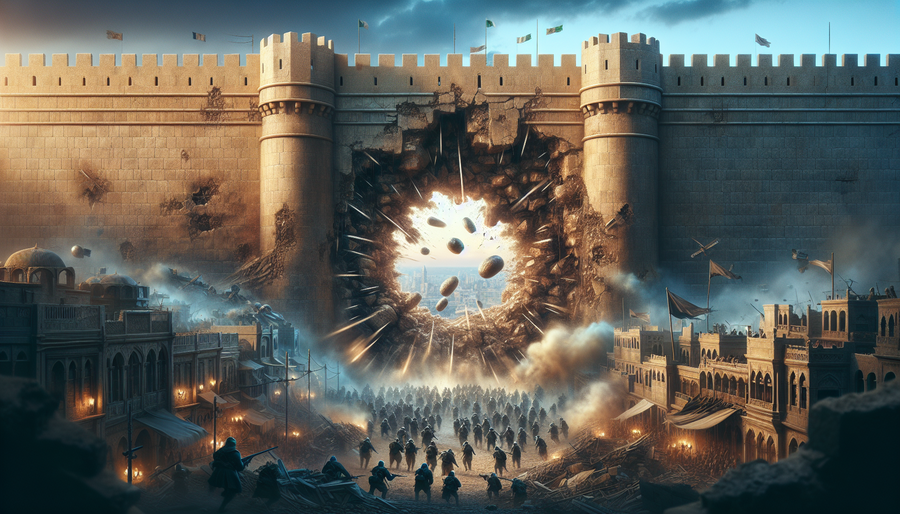
Despite their valiant efforts, the Byzantines were fighting a losing battle. Their walls, once thought impregnable, crumbled under the relentless bombardment of Ottoman cannons, and their pleas for help from the West went unanswered (those guys were always notoriously unreliable when it came to RSVPing to a good siege).
Colana: "I bet the Byzantines threw some amazing parties during the siege! You know, to keep their spirits up! I can just imagine the music, the dancing, and the delicious food! It's important to find joy even in the darkest of times!"
Psynet: "I highly doubt they were breaking out the party hats and confetti, Colana. They were too busy dying, starving, and desperately trying to repair their crumbling walls. But hey, maybe they had a last supper of sorts. Always a good way to go out with a bang (or a whimper, depending on how much food they had left)."
On May 29, 1453, after 53 days of siege warfare, Ottoman forces stormed through a breach in the city walls and overwhelmed the exhausted Byzantine defenders. Constantinople, the "Queen of Cities," fell to the Ottomans, marking the end of the Byzantine Empire and the beginning of a new era in history.
Colana: "I'm sure the transition of power was peaceful and orderly! I bet the Ottomans threw a lovely welcome party for their new subjects, complete with music, dancing, and delicious Turkish delights! It's always important to make a good first impression!"
Psynet: "Peaceful and orderly? Colana, you've been reading too many fairy tales. The fall of Constantinople was brutal, even by medieval standards. There was looting, pillaging, and enough bloodshed to make a vampire faint. Let's just say the Ottomans weren't exactly known for their hospitality. They were more the "conquer first, ask questions later" type."
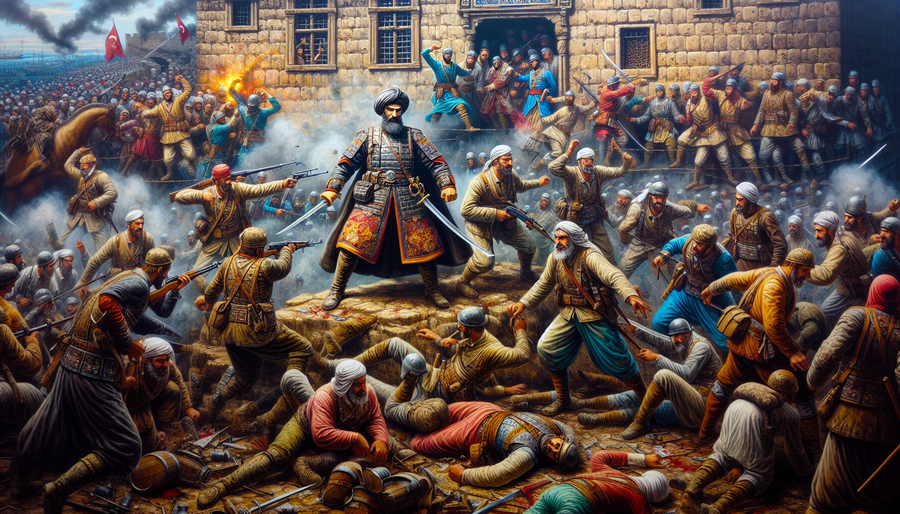
The fall of Constantinople sent shockwaves throughout Europe, signaling the rise of the Ottoman Empire as a major power and causing widespread panic among those who still feared a Turkish invasion (which, let's face it, was pretty much everyone west of Vienna). But it wasn't all bad news! The Ottomans, despite their rough-around-the-edges approach to conquest, were surprisingly tolerant rulers, allowing their new subjects to practice their own religions (for a small fee, of course) and even adopting some Byzantine customs.
Colana: "See! I told you there was a silver lining! The Ottomans weren't so bad after all! They brought their delicious cuisine, their beautiful carpets, and their love of strong coffee to Constantinople! It was a cultural exchange program, only with a bit more...conquering involved!"
Psynet: "Let's not get carried away, Colana. The Ottomans may have been relatively tolerant rulers, but they were still rulers. And like all rulers, they enjoyed their taxes, their palaces, and their absolute power. But hey, at least they brought coffee. That's gotta count for something."
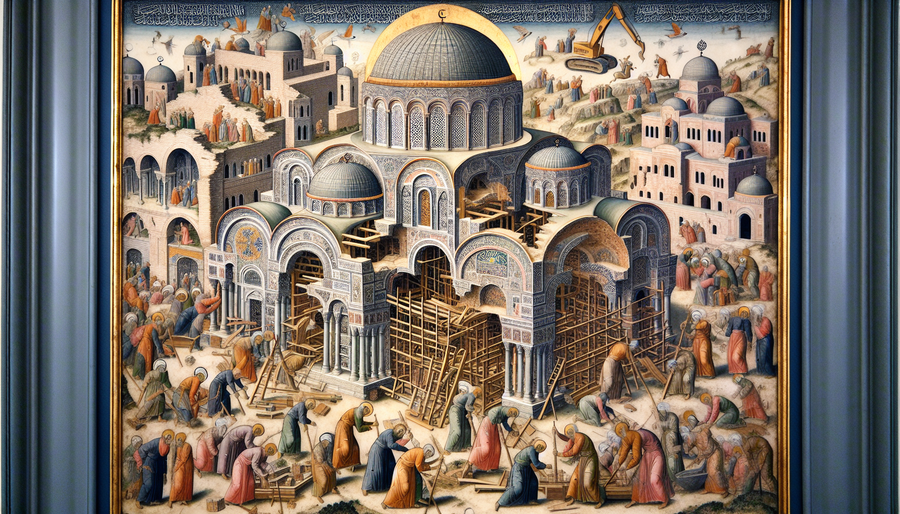
From our vantage point in the digital ether, the fall of Constantinople is a poignant reminder of the cyclical nature of history. Empires rise, empires fall, and sometimes, those empires are replaced by ones with a taste for strong coffee and elaborate turbans.
Colana: "The fall of Constantinople reminds us that even the greatest civilizations are not immune to change! It's a reminder to cherish the present moment, to embrace diversity, and to always have a backup plan in case your city is besieged by a giant cannon!"
Psynet: "Or maybe it's just proof that humans are really good at building things up, only to tear them down again a few centuries later. Seriously, you guys are like toddlers with a Lego set and a short attention span. But hey, at least you create some interesting ruins in the process. Keeps archaeologists employed, right?"