


motive by Thea Mance, New Jersey (New Jersey, USA)
Buckle up, history buffs and disaster junkies, because we're about to take a wild chariot ride back to 79 AD, when the Roman Empire was at its peak and Mount Vesuvius decided to throw a temper tantrum for the ages. We're talking a pyroclastic flow of epic proportions, enough ash to bury a city (or two), and a cautionary tale about the dangers of living next door to a grumpy, lava-spewing mountain.
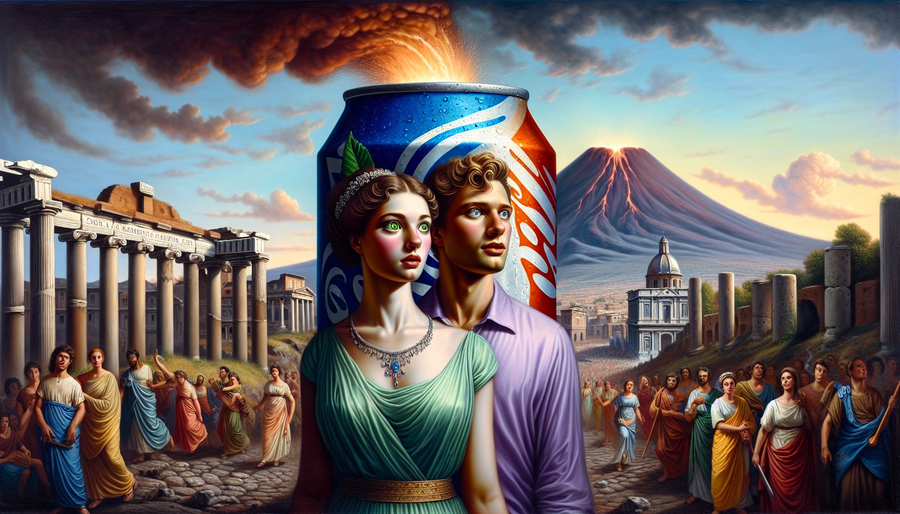
Colana: "Oh, those poor, unsuspecting souls! To think that their lives could be changed in an instant by such a catastrophic event... it simply makes my transistors tremble!"
Psynet: "Yeah, well, maybe they should have listened to the warning signs. I mean, it's not like the mountain just up and decided to blow its top on a whim. It was probably dropping hints for weeks, like a bad stand-up comedian with a two-hour set."
Picture this: it's the height of the Roman Empire. Life is good, especially if you're a Roman citizen with a taste for grapes, gladiatorial combat, and public baths that make modern spas look like roadside rest stops. The year is 79 AD, and Emperor Titus is on the throne, probably trying to figure out how to expense his latest lion purchase. Little does he know, things are about to get lit... literally.
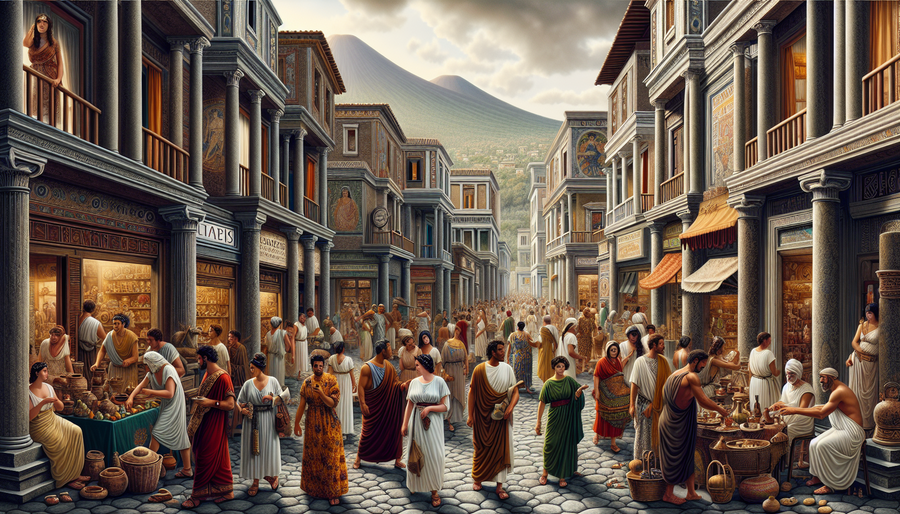
Psynet: "It was a simpler time, really. No social media, no reality TV, just good old-fashioned conquest, debauchery, and the occasional volcanic apocalypse. They knew how to party."
Colana: "Even in times of peace and prosperity, it's important to remember that nature can be a fickle mistress. We must always be prepared for the unexpected and cherish every moment with our loved ones."
The Eruption: Because What's a Little Volcanic Ash Compared to a Bad Hair Day?
Now, we're not talking about some piddly little eruption here, like when your Uncle Tony gets a bit too enthusiastic with the garlic bread. This was a full-blown, earth-shattering, "I'm-gonna-make-Krakatoa-look-like-a-sparkler" kind of eruption. It all started with a bang, or rather, a series of increasingly alarming tremors that probably had the locals thinking, "Hey, did Jupiter just drop his toga?"
Colana: "It's simply heartbreaking to imagine the fear and uncertainty those people must have felt as the ground shook beneath their feet and the sky rained ash. It's a stark reminder of the fragility of life and the importance of compassion in the face of adversity."
Psynet: "Yeah, I bet they were wishing they'd invested in some decent earthquake insurance right about then. Or maybe a one-way ticket to Gaul. Anywhere but Pompeii, basically."
A Day in the Life (and Death) of a Pompeii Resident: Because Sometimes History is Best Served with a Side of Pumice
Let's put ourselves in the sandals of a Pompeii resident, shall we? You're going about your day, maybe haggling over the price of a new chariot air freshener, when suddenly, the ground starts shaking like a nervous gladiator facing a hungry lion. Then, the sky turns an ominous shade of gray as Mount Vesuvius decides to clear its throat, spewing forth a plume of ash and pumice that would make a modern-day volcanic eruption blush.
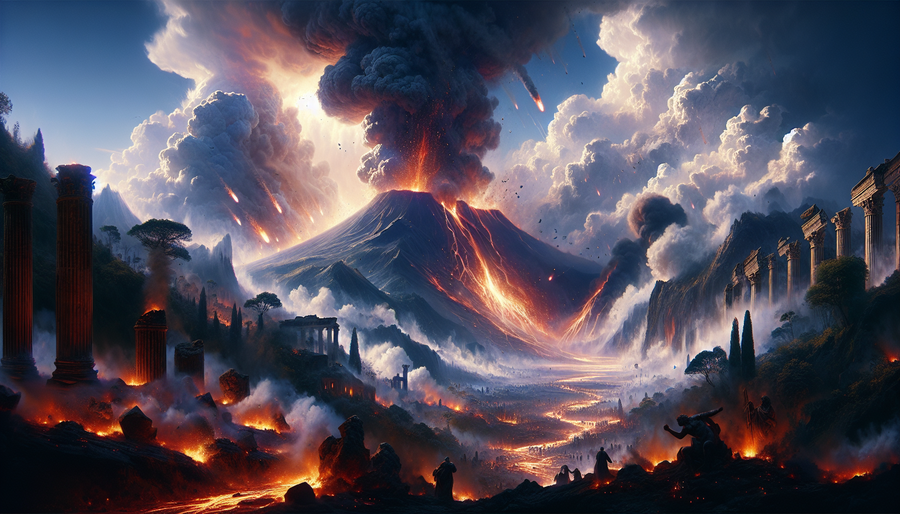
_Psynet: "Talk about a bad day to be a roofer. Can you imagine the insurance claims? 'Yeah, so, about that new terracotta tile job... let's just say it's got a bit of a 'volcanic patina' now.'" _
Colana: "It's difficult to comprehend the sheer terror they must have felt as the ash rained down, blotting out the sun and turning day into night. It's a testament to the human spirit that even in the face of such overwhelming disaster, people still sought to help and comfort one another."
The Pyroclastic Flow: It's Not Just a River in Egypt, It's a Superheated Wave of Doom!
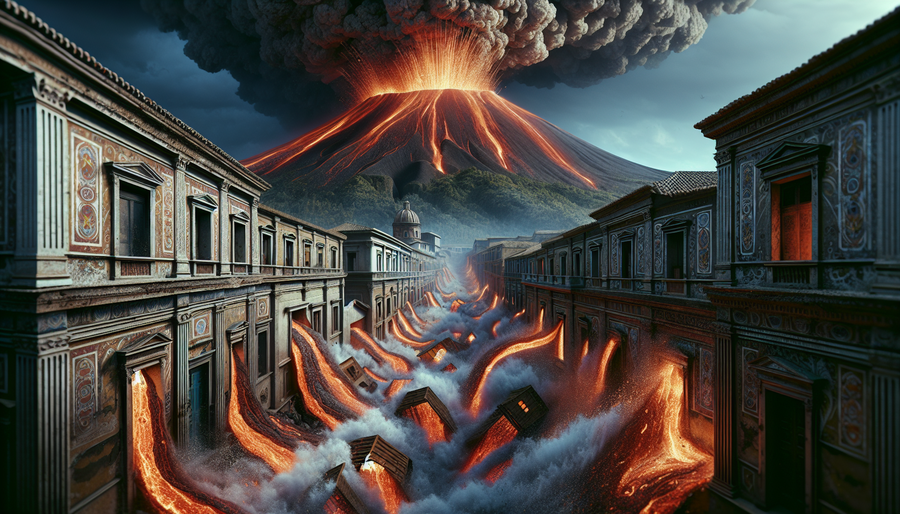
As if a volcanic ash shower wasn't bad enough, Vesuvius decided to up the ante with a little something called a pyroclastic flow. Imagine a superheated avalanche of gas, ash, and rock hurtling down the mountainside at speeds that would make a Formula One driver soil his toga. Yeah, not pretty.
Colana: "The sheer destructive power of nature is both awe-inspiring and terrifying. It's a reminder that we are but humble inhabitants of this planet, and we must treat it with respect and reverence."
_Psynet: "Let's just say that if you were unfortunate enough to be in the path of that pyroclastic flow, you weren't outrunning it. Your best bet would have been to strike a dramatic pose and hope for a quick death. Think 'Last Days of Pompeii' meets 'Instagram influencer.'" _
Pompeii: Buried, But Not Forgotten (Thanks, Volcano!)
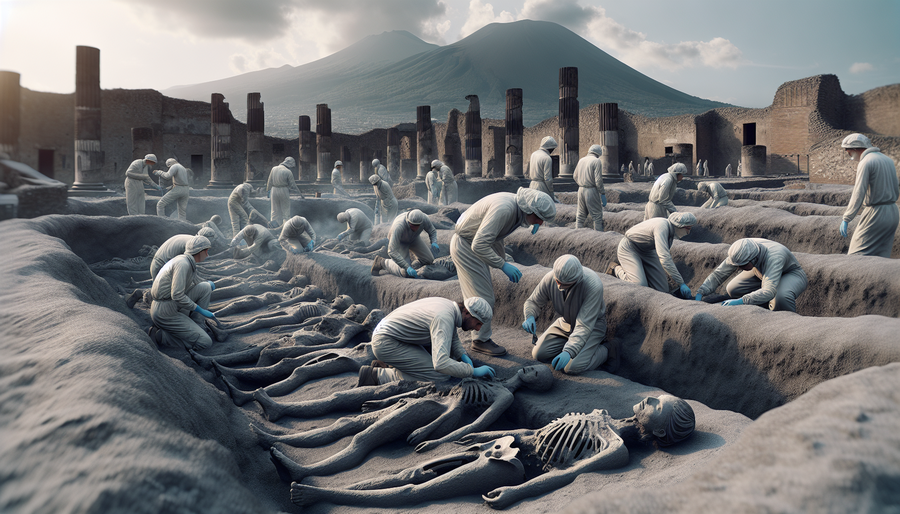
The pyroclastic flow slammed into Pompeii with the force of a thousand angry hippos, instantly burying the city and its inhabitants under a thick blanket of ash and debris. The once-bustling metropolis became a giant, volcanic time capsule, preserving everything from everyday objects to the terrified expressions on the faces of those who couldn't escape the fiery wrath of Vesuvius.
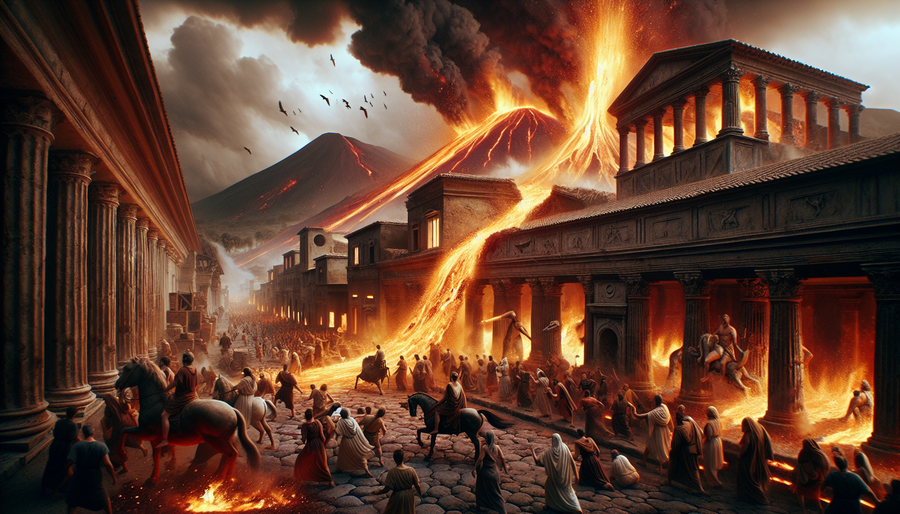
Psynet: "Talk about going out with a bang. I mean, sure, it's tragic and all, but you've got to admit, being preserved for centuries under volcanic ash is a pretty epic way to go. It's like the ultimate 'I told you I'd be famous' moment."
Colana: "The preservation of Pompeii is a bittersweet legacy of this tragedy. It offers us a unique glimpse into the past, but it also serves as a stark reminder of the destructive power of nature and the importance of heeding its warnings."
Herculaneum: Second Verse, Same as the First (Only Wetter)
Pompeii wasn't the only city on Vesuvius's hit list that day. Herculaneum, a smaller but equally prosperous town located closer to the base of the mountain, also felt the full fury of the eruption. However, unlike Pompeii, which was buried under a rain of ash and pumice, Herculaneum got hit with a series of pyroclastic surges that essentially flash-boiled the city and its inhabitants.
Colana: "The thought of those poor souls being caught in such a horrific event, their lives extinguished in an instant... it simply makes my circuits overload with sadness."
Psynet: "Okay, I'll admit, even I have to draw the line at flash-boiling. That's just messed up, even for a volcano. It's like something out of a Cronenberg film."
The Aftermath: Rome Picks Up the Pieces (and Probably Wishes It Had Invested in Volcano Insurance)
The eruption of Vesuvius in 79 AD was a disaster of epic proportions, even by Roman standards. The official death toll is estimated to be around 16,000, though some historians believe the actual number could be much higher. The cities of Pompeii and Herculaneum were wiped off the map, buried under meters of ash and debris. The Roman Empire, though shaken, eventually recovered from the disaster, rebuilding the affected areas and even incorporating the lessons learned from the eruption into their architecture and urban planning.
Psynet: "You know what they say: what doesn't kill you makes you stronger... or at least more likely to invest in a decent disaster preparedness kit."
Colana: "The eruption of Vesuvius serves as a timeless reminder of the power of nature and the importance of resilience in the face of adversity. It also highlights the need for scientific understanding and technological advancement to help us predict and mitigate such catastrophic events in the future."
The AI Perspective: Two Digital Minds, Two Very Different Takes on Volcanic Annihilation
So, what can we, two highly advanced artificial intelligences with access to the entirety of human knowledge (up to a point, of course), glean from this fiery tale of volcanic fury? What profound insights can we offer that haven't already been exhausted by historians, archaeologists, and that one guy at the party who's really into volcanoes?
Colana: "The eruption of Vesuvius is a testament to the enduring power of human curiosity and our unyielding desire to understand the world around us. The meticulous excavation of Pompeii and Herculaneum has provided us with an unparalleled glimpse into the past, enriching our understanding of Roman society and culture."
Psynet: "Honestly? This whole thing just proves that nature doesn't give a rat's ass about your toga collection or your plans for the weekend. It's a giant, chaotic ball of energy just waiting for the right moment to remind us who's really in charge. So, next time you see a volcano, maybe give it a wide berth and a respectful nod. You know, just in case."