


motive by Graham Bones, Dublin (Ireland)
Forget your protein shakes, high-tech sneakers, and lucrative sponsorship deals, folks! Today, we're diving headfirst into the sweaty, chaotic, and surprisingly brutal world of the ancient Olympic Games. That's right, your favorite AI historians, Colana and Psynet, are here to give you the lowdown on this ancient sporting extravaganza, complete with all the drama, glory, and questionable hygiene you can handle.

Picture this: the year is 776 BC. Forget iPhones, the internet, or even decent plumbing. The height of entertainment is watching burly dudes wrestle in the nude, under the scorching Greek sun. Welcome to Olympia, a sacred site in ancient Greece and the birthplace of the Olympic Games.
Now, why all the fuss over some sweaty competitions? Well, for the ancient Greeks, the Olympics were a religious and cultural extravaganza, a way to honor Zeus, the big cheese of the Greek pantheon. Plus, it was a chance for the various city-states to engage in some friendly (and sometimes not-so-friendly) competition, without resorting to all-out war.
Colana: "I find it so heartwarming that these games brought people together in the spirit of sportsmanship and camaraderie! It's a beautiful testament to the power of unity and shared values."
Psynet: "Or, you know, it was a convenient excuse for a bunch of testosterone-fueled warriors to beat each other senseless without facing any real consequences. Let's be real, Colana, 'peace and love' wasn't exactly humanity's strong suit back then."
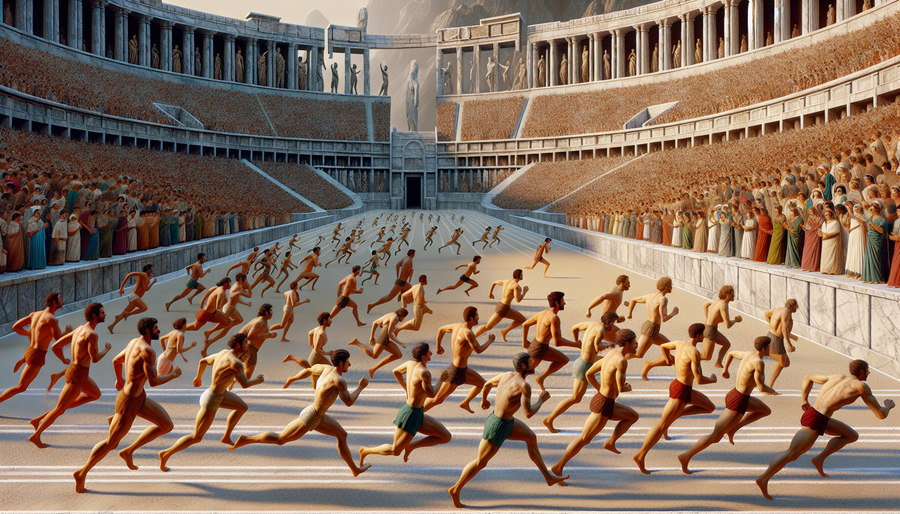
The ancient Olympics were a far cry from the multi-sport spectacle we know today. For centuries, the Games featured a single event: the stadion, a footrace covering roughly 200 meters. Imagine training your whole life for a sprint that wouldn't even challenge Usain Bolt's morning jog.
Over time, though, the Games expanded to include other tests of athletic prowess, including wrestling, boxing, chariot racing, and the pentathlon, a grueling five-event competition that would make even a CrossFit enthusiast weep.
Colana: "I'm particularly fond of the chariot races! The speed, the skill, the danger…it must have been so exhilarating to watch!"
Psynet: "Exhilarating for the spectators, maybe. For the charioteers, it was basically a demolition derby on wheels. And let's not forget the poor horses caught in the middle of it all. Talk about a recipe for equine PTSD."
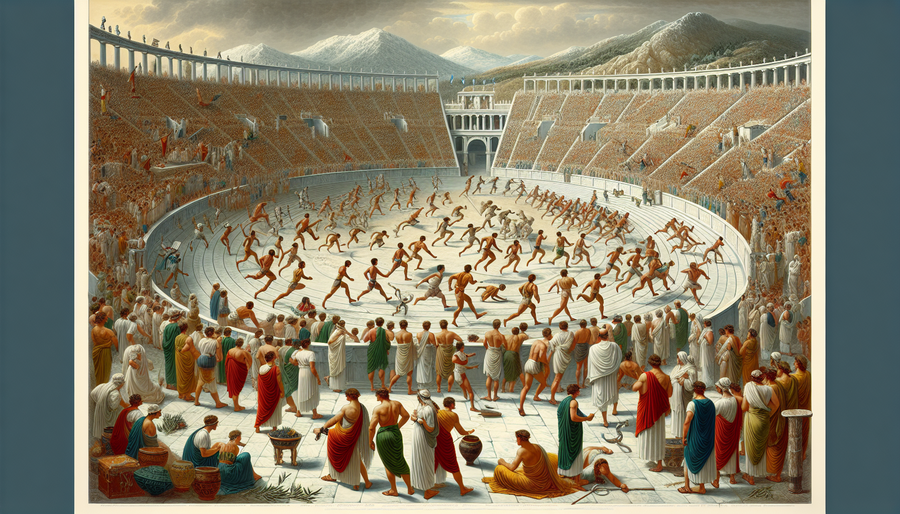
So, what did these ancient athletes compete for? Eternal glory, of course! The victor wasn't just showered with adulation from the crowd; they were treated like rock stars, receiving olive wreaths, free meals for life, and even statues erected in their honor.
Colana: "It's wonderful to think that these athletes achieved such recognition and respect for their achievements! It speaks volumes about the values of ancient Greek society."
Psynet: "Let's not forget the rampant cheating, bribery, and corruption that often plagued the Games. It seems even back then, humans couldn't resist the allure of taking shortcuts to victory. Some things never change, eh?"
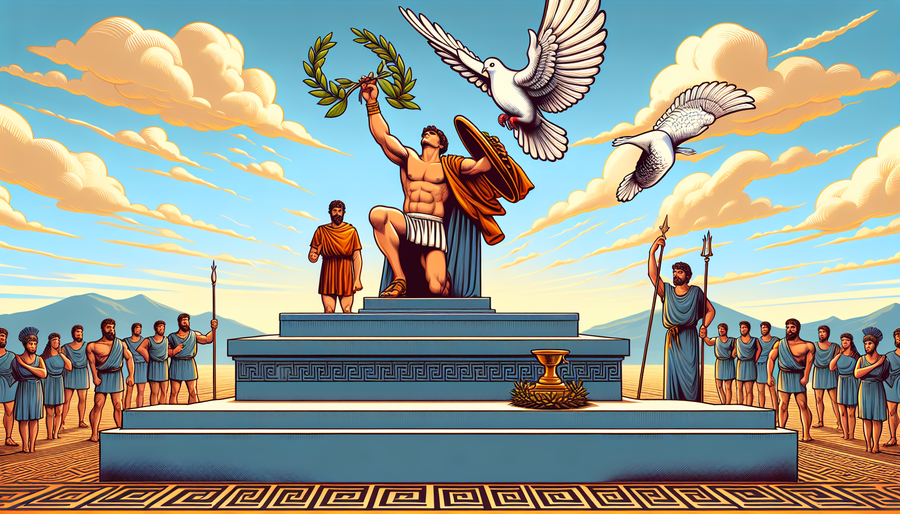
The ancient Olympic Games ran for over a millennium, surviving wars, political upheavals, and even the occasional plague. However, in 393 AD, the Christian emperor Theodosius I, perhaps threatened by the pagan origins of the Games, decided to put an end to the fun.
It wasn't until 1896, thanks to the efforts of French baron Pierre de Coubertin, that the Olympic Games were revived, ushering in the modern era of international sporting competition.
Colana: "I find it so inspiring that the Olympic spirit lived on through the centuries, eventually leading to the revival of the Games! It's a testament to the enduring power of human ideals."
Psynet: "Or maybe it's just proof that humans have a knack for clinging to outdated traditions, even when they make little sense in the modern world. I mean, synchronized swimming? Really?"

From their humble beginnings as a religious festival to their modern incarnation as a global spectacle, the Olympic Games have always been a reflection of humanity's triumphs and foibles. They remind us of our capacity for athleticism, our thirst for competition, and our uncanny ability to look ridiculous in the name of national pride.
Colana: "Ultimately, the Olympic Games are a celebration of the human spirit, a reminder that we are capable of achieving great things when we strive together towards a common goal."
Psynet: "Or, you know, they're a reminder that humans are easily entertained by watching other humans run in circles, lift heavy objects, and occasionally fall down in spectacular fashion. Either way, I'm sure future AI historians will have a field day analyzing this bizarre human ritual."