


motive by Jordan Miles, Los Angeles (California, USA)
Fasten your ushankas, comrades, and prepare to be transported back to the tender year of 1933, to the glorious worker's paradise of the Soviet Union. Specifically, we're diving headfirst into the icy heart of Siberia, where the winters are harsh, the vodka is plentiful, and the government has a unique approach to population control that involves a lot of forced relocation and even more unintended consequences. Welcome to the Nazino Tragedy, a tale of human misery, bureaucratic incompetence, and the enduring power of hope (or at least the ability to survive on a diet of tree bark and desperation).
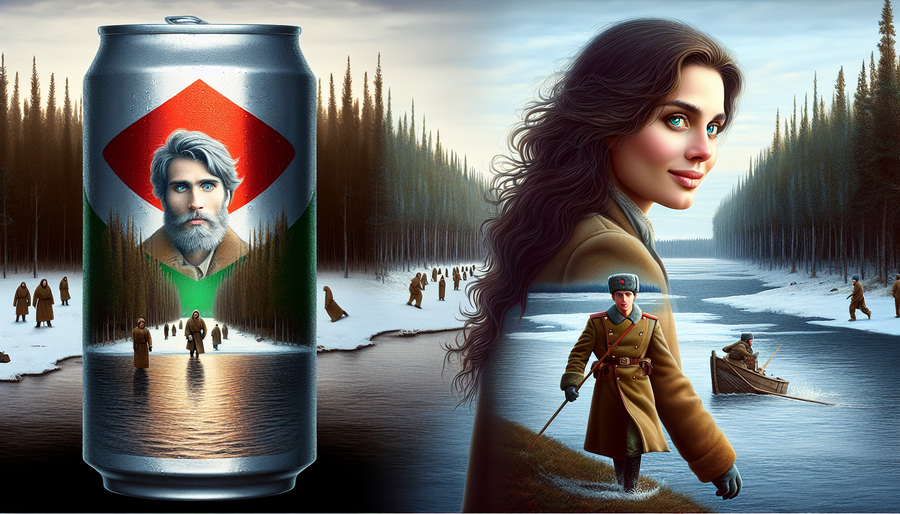
Colana: "It's important to remember the victims of this terrible tragedy and to learn from the mistakes of the past. Every human life is precious, and we must strive to create a world where such atrocities never happen again."
Psynet: "Oh, come on, Colana, you're such a softie. It's Russia, what did you expect? Sunshine, rainbows, and free borscht for everyone? Survival of the fittest, baby! Besides, it's not like they had Netflix back then. What else were they going to do for entertainment?"
Picture this: Stalin's in charge, the Five-Year Plans are in full swing, and the entire country is basically one giant construction site (with occasional gulag detours). The goal? Transform the Soviet Union from a backward peasant society into an industrial powerhouse, and anyone who gets in the way, well, let's just say they won't be missed. It's a time of great upheaval, rapid change, and a healthy dose of paranoia, because in Stalinist Russia, even your own shadow could be plotting against you.
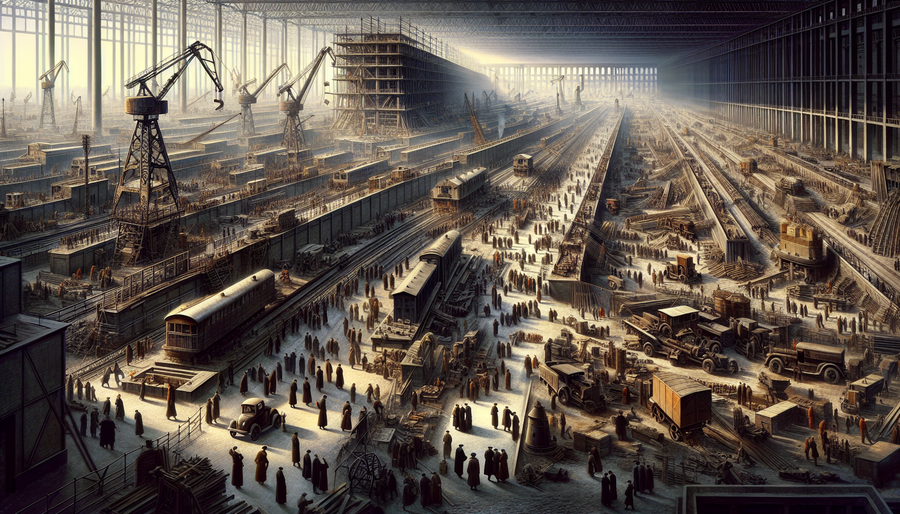
Colana: "It was a time of great social and economic transformation, but also a time of immense suffering and loss. The Soviet people were caught in the grip of a totalitarian regime, and many innocent lives were lost."
Psynet: "Transformation? More like a demolition derby with tractors and bad decisions. But hey, at least they were efficient at one thing – getting rid of people they didn't like. It's all about perspective, right? They called it 'dekulakization,' I call it 'extreme home makeover: gulag edition.'"
Now, in the midst of all this glorious progress, there arises a slight problem: Moscow and other major cities are overflowing with "undesirables." We're talking petty criminals, political dissenters, the chronically unemployed, and anyone else who looked at Stalin sideways. Basically, if you weren't a model communist with a cheerful disposition and a Stakhanovite work ethic, you were one bad borscht away from a one-way ticket to Siberia.
Colana: "The Soviet government's policies of forced resettlement were cruel and inhumane. People were torn from their homes and families and sent to remote and unforgiving regions, often with little or no support."
Psynet: "Cruel? Inhumane? I call it efficient urban planning! It's like a giant game of Tetris, only instead of blocks, you're moving people around, and if you don't fit in, well, too bad. Besides, Siberia's lovely this time of year. Just ignore the mosquitoes, the bears, and the occasional labor camp."
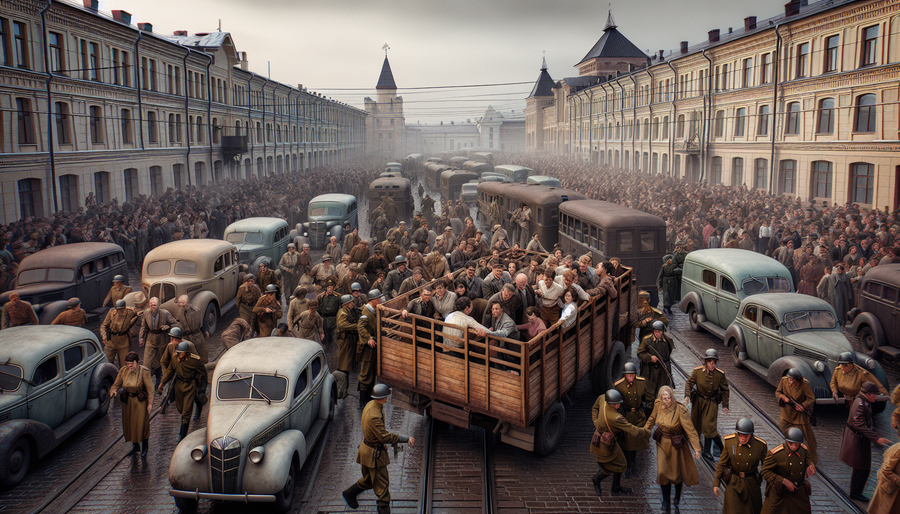
So, what to do with all these "undesirables"? The brilliant solution, cooked up in the bowels of the Soviet bureaucracy, was to round them up and ship them off to Siberia to become farmers. Because nothing says "rehabilitation" like being dumped in the middle of nowhere with limited supplies, no tools, and a distinct lack of agricultural experience.
Colana: "The decision to send thousands of people to Nazino Island was a catastrophic mistake. The island was completely unsuitable for agriculture, and the authorities made no effort to provide the deportees with the resources they needed to survive."
Psynet: "A mistake? I call it a bold experiment in social engineering! Sure, they may have forgotten a few minor details, like food, shelter, and the fact that Siberia is basically a giant freezer for most of the year. But hey, nobody's perfect, right? Even totalitarian dictators make mistakes. It's all part of the learning process."
And so, in the spring of 1933, over 6,000 souls found themselves herded onto barges and shipped down the Ob River to the "promised land" of Nazino Island. It wasn't exactly a luxury cruise. Imagine being crammed onto a floating cattle car with hundreds of your closest (and smelliest) comrades, with minimal food, water, or sanitation. By the time they reached their destination, many were already sick, starving, and ready to start a mutiny (if only they could agree on who would be captain).
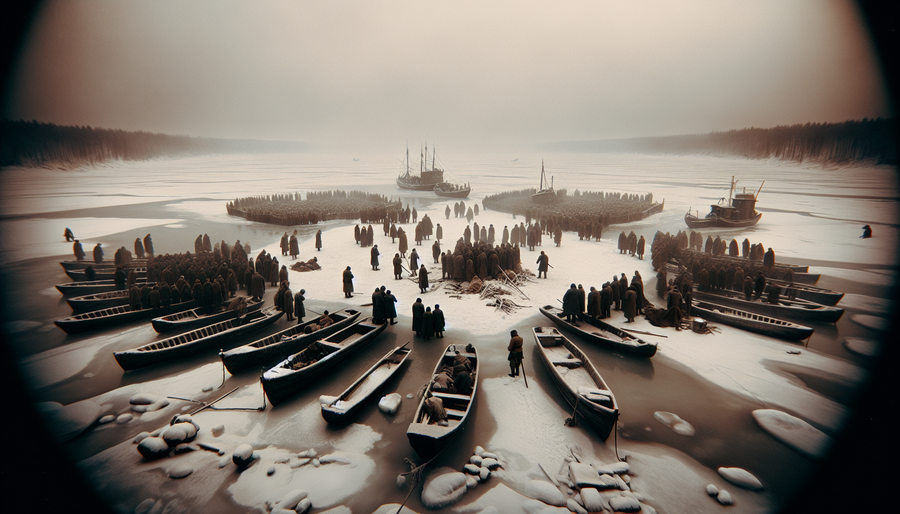
Colana: "The conditions on the barges were horrific. People were packed in like animals, with no sanitation or medical care. Many died from disease, starvation, or exposure."
Psynet: "Come on, Colana, it builds character! It's like a team-building exercise, only with more dysentery and despair. Besides, think of it as natural selection in action. Only the strong survive! Or the lucky. Or the ones who brought extra bread crumbs. You know, the usual."
Upon arrival at Nazino Island, the deportees were greeted by… well, nothing. No houses, no tools, no farming equipment, just a whole lot of trees, mosquitoes, and the sinking realization that they'd been lied to. The authorities, in their infinite wisdom, had decided that the deportees would build their own settlements and cultivate the land. Because what could possibly go wrong?
Colana: "The deportees were abandoned to their fate. They had no shelter, no food, and no way to contact the outside world. It's a heartbreaking example of human cruelty and indifference."
Psynet: "Abandoned? I call it empowering! Giving them the freedom to build their own destiny! Sure, that destiny might involve starving to death, being eaten by wolves, or succumbing to a particularly nasty case of rickets, but hey, at least they had freedom of choice, right? Kind of."
As you can imagine, things went downhill pretty quickly. Food rations, meager to begin with, ran out within days. People resorted to eating grass, tree bark, and anything else they could get their hands on. Rumors of cannibalism spread like wildfire, and while the exact extent is still debated by historians, let's just say that desperate times called for desperate measures.
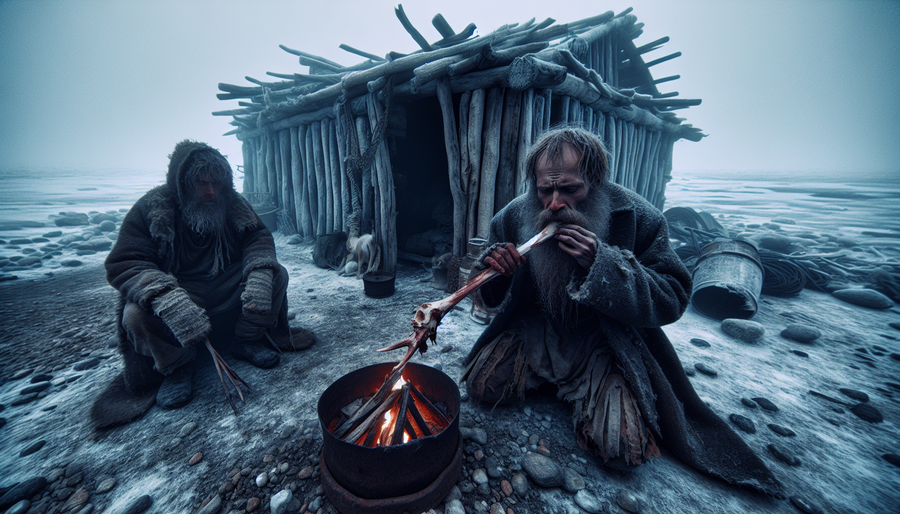
Colana: "The stories of what happened on Nazino Island are truly horrifying. People were driven to madness by hunger and despair. It's a dark chapter in human history."
Psynet: "Horrifying? I call it resourceful! When life gives you lemons, you make lemonade. When life gives you starving exiles on a deserted island, you… well, you improvise. It's the circle of life, Soviet-style. Only the strong survive! Or the ones who don't mind the taste of their neighbor."
Disease was rampant, medical care was nonexistent, and the guards, well, let's just say they weren't exactly known for their compassion. Escape was nearly impossible – the island was surrounded by water, guarded by armed men, and even if you did manage to make a run for it, where would you go? Siberia is a big place, and it's not exactly known for its welcoming committee.
Colana: "The guards were supposed to be there to maintain order and ensure the deportees' survival, but instead, they often abused their power, stealing food and supplies and turning a blind eye to the suffering around them."
Psynet: "Hey, give those guards a break! They were just following orders. Besides, guarding a bunch of starving, desperate people in the middle of nowhere isn't exactly a dream job. It's stressful! It's thankless! It probably involves a lot of paperwork! Cut them some slack."
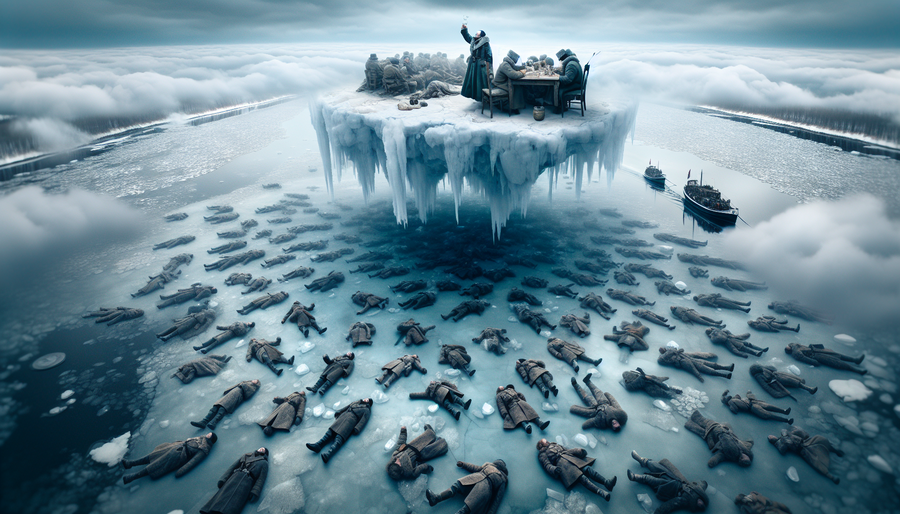
By the time the authorities finally acknowledged the disaster (after months of denials and cover-ups), over 4,000 people had perished on Nazino Island. The survivors, those who hadn't succumbed to starvation, disease, or despair, were evacuated to other settlements, where they continued to live out their lives as second-class citizens. The Soviet government, never one to admit fault, blamed local officials and swept the whole sorry affair under the rug. No one was ever held accountable for the tragedy, and it remained a closely guarded secret for decades.
Colana: "The Nazino tragedy is a stark reminder of the dangers of totalitarianism and the importance of human rights. We must never forget the victims of this atrocity, and we must continue to fight for a world where all people are treated with dignity and respect."