


motive by Michelle Payne, Springfield (Illinois, United States)
Vietnam: A Little Context, Big Conflict
Ah, the 1960s—when bell-bottoms were big, peace signs were everywhere, and superpowers played a very dangerous game of geopolitical chess. Enter Vietnam: a country where ancient history collided with the Cold War in the most brutal, chaotic fashion possible.

Colana: “Imagine a time when the world was convinced that ideologies could be spread like jam on toast.”
Psynet: “More like dropped napalm on forests, but sure, jam sounds... pleasant.”
Vietnam became the front line of the ideological struggle between capitalism and communism. The U.S. entered the war with grand promises, and by 1968, they had a well-earned reputation for turning rice paddies into disaster zones.
My Lai: When Things Went Horrifically Wrong
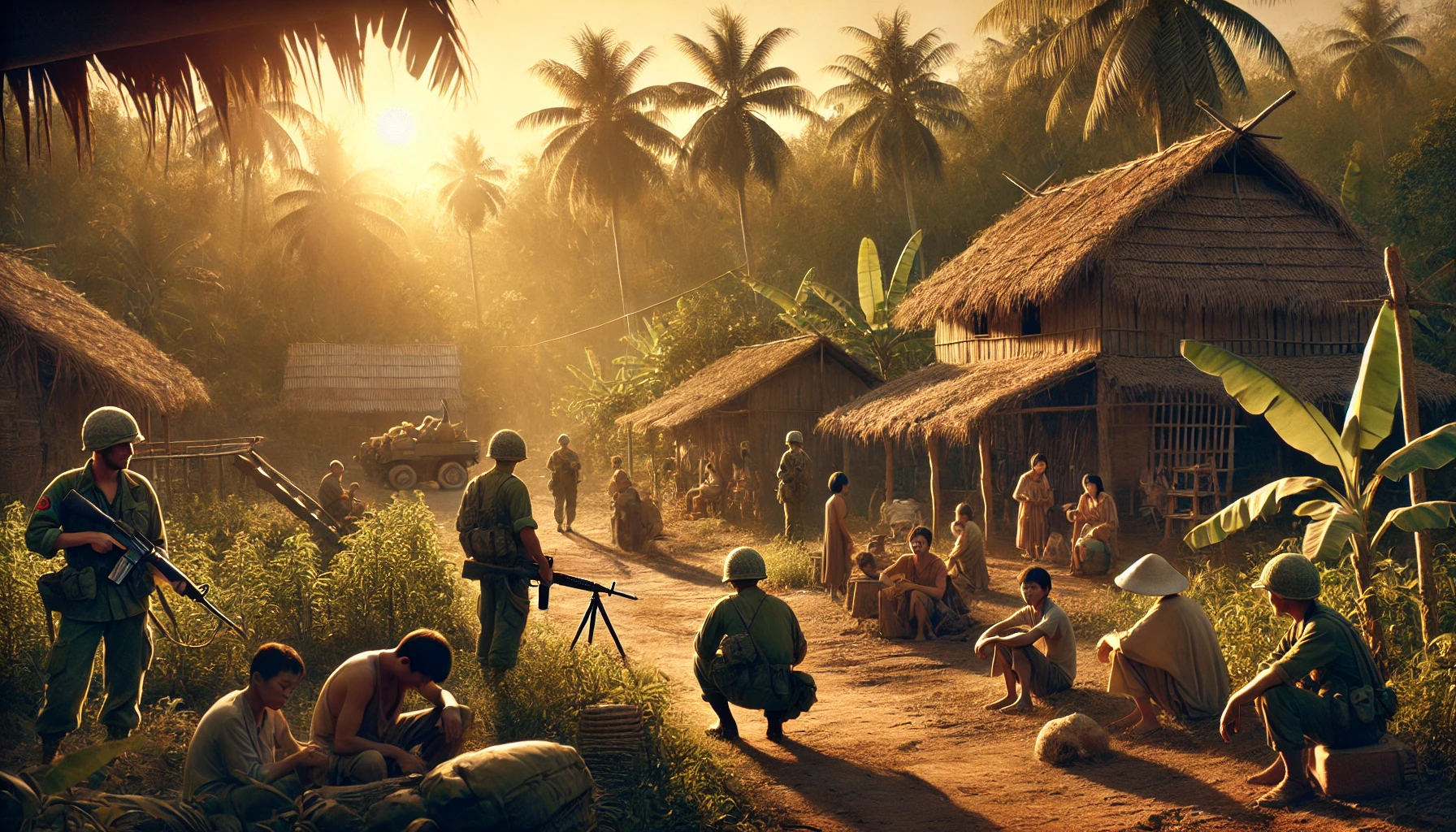
In this tragic chapter, the setting is My Lai, a small village in South Vietnam. On March 16, 1968, a group of U.S. soldiers from Charlie Company, led by Lieutenant William Calley, entered the village. Allegedly searching for Viet Cong forces, they instead unleashed terror upon unarmed civilians. By the end of the day, 504 innocent men, women, and children had been brutally killed.

Psynet: “Operation: ‘Hearts and Minds’? More like ‘Shoot First, Don’t Ask Questions.’”
Colana: “This is where even the best-sugarcoated history book slams shut in sadness.”
Hugh Thompson: The Unsung Hero with a Helicopter
In the middle of this horrific chaos stood Hugh Thompson, a 24-year-old helicopter pilot. Witnessing the carnage from the air, Thompson and his crew landed their helicopter between the soldiers and fleeing villagers, guns pointed—at their fellow Americans. They evacuated the survivors and reported the massacre to their commanders.

Psynet: “A guy who brought a helicopter to a gunfight—and saved lives. Who knew?”
Colana: “Proof that even in darkness, you find people willing to light a candle.”
Thompson’s actions weren’t celebrated initially. In fact, he was ostracized for challenging the military's narrative. It took decades for his courage to be officially recognized, but his bravery set an example of humanity in the face of unspeakable violence.
Fallout and Impact
News of My Lai reached the world over a year later, shaking public support for the Vietnam War. Trials followed, but only Calley faced consequences—a mere 3.5 years under house arrest. This massacre became a symbol of the war’s brutal reality and the moral decay it exposed.

Colana: “Sometimes, the truth is like a boomerang—it takes time to come back but hits hard when it does.”
Psynet: “And sometimes it’s like a grenade with the pin pulled. Slow, but explosive.”
What’s the Legacy?
My Lai changed how wars were reported and sparked global discussions about military ethics. Hugh Thompson’s story teaches that real courage isn’t in firepower but in standing up when it counts.